Saturday, July 26, 2014

"Player Dog Rest in Peace" & The Power of the Arts

cover of "Player Dog Rest in Peace"
A friend of mine posted on Facebook that, as she was going through old folders, she found a copy of the poetry chapbook I published back in 1996, titled "Player Dog Rest in Peace". I shared the cover on Facebook and several friends remember and/or still have a copy of it!

Seeing the post from someone else reminded me how happy I am that I put out the effort to publish this. I didn't make much money (I covered the printing costs and had enough extra to buy a nice dinner during a night out with friends). And it didn't "lead anywhere" (i.e., I'm not a famous poet). However I've long since learned that, if we only do things that make money or lead somewhere, that we're missing some of life's most enriching opportunities and experiences. I learned a lot from creating and publishing "Player Dog Rest in Peace".

The power of this chapbook is what it conjures up in me. I smiled the instant I saw the picture posted by my friend, because a flood of memories associated with it and the poetry it contains - which was all written during my first few years living in Chicago - came to mind:

  • Reading "Intro to Urban" at the Green Mill with a jazz trio playing "Cantaloupe Island" behind me
  • Afternoons and evenings hanging out at La Piazza coffeehouse on Broadway
  • Being a featured poet in the Poets Alive! series at Cafe Voltaire
  • My experience of love at first sight, which ended very sadly within days and led me to write "Dominoes", a poem published by four publications within a few months
  • Having over a dozen poems published in various small press zines
  • Performing my gay rap song "Icebreaker" at Pong Jam (again with a band behind me)
  • Lifting interesting phrases from opaque personals in The Reader (the title for the poem "Apocalypse Surfer" being one) 
  • Seeing rapper Guru perform live with jazz legend Donald Byrd (and Vanessa Daou opening)
  • All the crazy little theatre venues: Annoyance Theatre, Torso Theatre, and the Neofuturarium
  • Discovering Sartre and Nikki Giovanni and loads of other writers while riding the el to wherever I might have been going at any particular time
  • Seeing a tour bus go by and then realizing in shock that someone was taking a picture of me(?)
  • All the fun I had drawing the cover, designing the book, and playing with fonts
  • Sitting in the window of my third floor walk-up, with my feet dangling into space and writing as the sun set, while listening to the latest acid jazz CD I'd picked up at Evil Clown Records 
  • Going out for Ethiopian food with friends and finding a man there playing a giant kora harp
  • The joy of completing large poems like "The City is Made of Music" and "I am Pete; I Be Writing"

This period of my life seemed to be one moment like this after another, and it lasted something like three years. It was one of the best times of my life, partly because I was writing, publishing, and performing so much but also because what I was writing was such a perfect prism of my experiences in the city as well as all the things going on in my life. I was writing very personal poetry and creating a kind of private language, yet it was all very accessible work that captured a place and time in words. At the tail end of it, I met Jim and - before I knew it - one chapter of life came to an end and another began.

As for the title of the chapbook? When I was a little kid and we drove into the city, I always remember seeing this overpass where someone had spray painted the phrase "player dog rest in peace". For me, this was the gateway to Chicago. While I always wondered who wrote the graffiti and why, I'm glad I never found out and it remains a question mark. Anyway, after I moved into the city (as I'd wanted to do for most of my life), that overpass graffiti immediately suggested itself as the ideal title for this chapbook I was making to compile all the poetry that encapsulated my experiences in Chicago.

Almost two decades have gone by. The overpass graffiti has been erased, La Piazza is closed, Evil Clown and Cafe Voltaire are both gone, and the neighborhood I lived in is a lot more like Lincoln Park than the diverse, quirky, rough around the edges community I remember. And I'm different too. I'm definitely not that brassy little gamin with the oversized clothes and backwards baseball cap (think The Little Rascals with a grunge/hip-hop make-over) who moved to the city to - as I wrote in the poem "Intro to Urban" - "walk rainbow streets/and take a hit on the blunt of life".

I'm writing about this, because it's an example of one of the most powerful things about art - our own or anyone else's. Art encodes itself into our lives and captures parts of our lives like gas giant planets with a hundred tiny moons in orbit. When we experience that painting or song or poem again, we get to go back and relive those memories and feelings again.

Saturday, July 19, 2014

Mumonkan, Koan 2: Hyakujo's Fox

image: The Gateless Gate blog
I had forgotten to post this koan! Maybe I didn't because, back over four years ago when I first integrated the Mumonkan into my Zen practice, I wasn't sure if I was going to stick with it. Or it perhaps it's because I didn't think I had solved it. (Or maybe I just dreaded typing it!). Whatever. I went back into my journal so the Mumonkan thread would be complete.

When Hyakujo Osho delivered a certain series of sermons, an old man always followed the monks to the main hall and listened to him. When the monks left the hall, the old man would also leave. One day, however, he remained behind, and Hyakujo asked him, "Who are you, standing here before me?" The old man replied, "I am not a human being. In the old days of Kashyapa Buddha, I was a head monk, living here on this mountain. One day a student asked me, "Does a man of enlightenment fall under the yoke of causation of not?" I answered, "No, he does not." Since then I have been doomed to undergo five hundred rebirths as a fox. I beg you now to give the turning word to release me from my life as a fox. Tell me, does a man of enlightenment fall under the yoke of causation or not?" Hyakujo answered, "He does not ignore causation." No sooner had the old man heard these words than he was enlightened. Making his bows, he said, "I am emancipated from my life as a fox. I shall remain on this mountain. I have a favor to ask of you: would you please bury my body as that of a dead monk."

Hyakujo had the director of the monks strike with the gavel and inform everyone that after the midday meal there would be a funeral service for a dead monk. The monks wondered at this, saying, "Everyone is in good health; nobody is in the sick ward. What does this mean?" After the meal Hyakujo led the monks to the foot of a rock on the far side of the mountain and with his staff poked out the dead body of a fox and performed the ceremony of cremation. That evening he ascended the rostrum and told the monks the whole story. Obaku thereupon asked him, "The old man gave the wrong answer and was doomed to be a fox for five hundred rebirths, Now, suppose he had given the right answer, what would have happened then?" Hyakujo said, "You come here to me, and I will tell you." Obaku went up to Hyakujo and boxed his ears. Hyakujo clapped his hands with a laugh and exclaimed, "I was thinking that the barbarian had a red beard, but now I see before me the red-bearded barbarian himself."

Yeah, it's a long koan and it's rather unique because of its length. It's also unique because it contains this fantastical, supernatural story involving a form of 'divine punishment', which I find distasteful. After reading my notes about it in my journal, I think it's pretty clear I didn't really 'solve' it.  Maybe the length threw me?

My initial reaction had been to ignore the wacky story and focus on the interaction with Obaku. However, as I think about it now, that was probably a mistake (more on that in a bit). What I initially got out of this koan is how dangerous it is to give answers (this is why Obaku boxed Hyakujo's ears and why Hyakujo was so pleased that he did so). It's really suggesting that the old man's offense was not giving the wrong answer but because he gave an answer at all. To extend this, perhaps we are all foxes when we try to tell people 'answers' or hand them 'truths'.

Image: Marvin Schulz
This lesson also touches on perception through it's 'Russian doll' structure. The koan's structure is a story within a story within a story. The writer of the koan is telling us about Hyakujo, who has apparently related to him this story about an old man he met, and the old man is telling Hyakujo a yarn about being made a fox. So we are, at minimum, third or fourth hand from reality. This is another possible reason for Obaku to box Hyakujo's ears, for they were discussing interpretations of recollections of experiences, rather than dealing in direct perceptions.

Now, back to my mistake in dismissing the wacky story. In the story, Hyakujo's answer about whether an enlightened man is subject to causation is: "He does not ignore causation." This made me think of, how when I sit in zazen, thoughts always come to me as I clear my mind. What I've learned is that if I try to ignore those thoughts or silence them, they persist. It's better to acknowledge them, even as I do not pursue them. I imagine them as small helium balloon drifting towards me. I acknowledge each one and think "later" to send it away. Doing this make it much easier to clear my mind. This might be similar to what Hyakujo meant in his answer. Whether we are able to keep something from impacting us or not isn't the point; we cannot ignore it if we want to stay in the right mind state. Ignoring or suppressing something is an activity. An alert mind can be clear, but and active one? Probably not so much.

These are all nice take aways, but I'm still not sure I've exhausted this koan. Perhaps that was the reason I didn't post it way back when I worked with it, and it wasn't until much later (Koan 12) that I really grasped that koan study cannot be viewed as a relay race. Not getting a particular koan isn't a bad thing, and it's not something to be stymied by.

Wednesday, July 9, 2014

The Power of Everyday Zen

Jenny Trout:
"I Wore a Bikini and Nothing Happened"
Everyday Zen is a term I use (and, I think, coined) to refer to the practice of bringing the mind state reached during zazen into everyday life. The idea is that, once discipline of the mind is learned through zazen, that it can be applied at any time...or even all the time. [Here are other posts about Everyday Zen on Zen Throw Down: Ordinary Mind is the Way & Everyday Zen and then later More on Everyday Zen.]

I thought of the power of Everyday Zen when a friend sent me a recent article by Jenny Trout called "I Wore a Bikini and Nothing Happened". It's a short, humorous piece about a serious issue: body image. In the article, the author (pictured) describes how she refused to allow others to dictate whether she should wear a bikini, how she should feel about wearing a bikini, and - most importantly - how she should feel about herself.

Trout never references Zen Buddhism or Everyday Zen in her piece, not even indirectly. However, I found the spirit of her thinking to be very much like the disciplined mindset of Zen Buddhism or Everyday Zen. In particular, the way she filtered out and refused to be influenced by the negativity of those around her. This attitude or mind state is in direct contrast with what we refer to in Zen Buddhism as a deluded mind state. A deluded mind state can be many (many, many, many) things, but it sometimes entails creating our own suffering through second guessing ourselves, creating self-doubt, or dwelling on negative thoughts.

Zazen, by disciplining the mind, teaches us how to recognize when we are engaged in the right mind state. For me, I've learned what the right mind state feels like. That way, through Everyday Zen, I can be like an adult providing a gentle course correction to a child who's learning to ride a bike. More precisely, I become both the child learning to ride and the adult making the correction. When I recognize I'm slipping from the right mind state, I can subtly correct myself. Instead of suffering the pain of a fall, I facilitate riding (even if I'm riding a bit ineptly).

I had a situation like this (and like Trout's) occur to me recently. A little while ago, I posted how I'd started taking guitar lessons. While I was considering whether or not to do it, I got discouraged when it occurred to me that most people start learning a musical instrument when they are a child. And then I thought that it might seem strange to people to see an adult doing this. What I was doing was inventing a worry or problem in my head that may or may not really exist and then allowing it to influence me as if it were real.

This is one of the many poisons of a deluded mindset: we convince ourselves everyone is focused on us to a degree that is simply unrealistic. We over think the situation and, in doing so, place ourselves on a rack of self-consciousness and self-doubt that makes us miserable. And/or we allow the thoughts and judgments of others - real of imagined - to direct our behavior. Delusion - simply put - is a torture chamber we create in our minds where we are both the victim and the sadist.

Luckily, I recognized that this was not right-minded. When that happened, I dismissed all those thought and concerns. As it turns out, I have not received any strange reactions from anyone. Of course, I'm not sure what other people think about me taking lessons but, importantly, I am not spending any time pondering it or trying to figure it out. It's ultimately not important and, truthfully, it's most probable that no one is giving me and my guitar lessons any thought at all. If I'd turned away from taking them, I would have deprived myself of a new experience for no reason.

Avoid the maze of delusion (although, in Zen philosophy,
'contentment' might work better here than 'happiness')
The way I caught myself, and the way Trout pushed back on other people's judgement of her wearing a bikini are small examples of the power of Everyday Zen. The important thing to realize is that, by disciplining the mind, we gain power over life. Happiness is much easier to achieve when we're not our own worst enemy.

This discipline also thrusts ownership for one's own life back on oneself (where it belongs). Ultimately, we can't blame our own insecurities on other people when we're the ones with the power to decide whether they or their opinions affect us. Everyone faces self-doubt or harsh judgement in their lives; how we deal with it is what determines whether we will be at peace or not. We can either let self-doubt and outside forces rule us or we can be free of them. If we allow it to rule us, we cannot forget that we are the ones who put the chains on and wear them.

This is not to say that Everyday Zen solves all problems or guarantees life will be blissful and easy. Suffering is a part of life, and I have found there are always people who want to control me and who will punish me or try to hurt me if I do not let them. However, from experience, I have also learned that no matter how unhappy or painful their actions are in the short term, by maintaining the right mind state I will be content in the long run.

A saying by an ancient Zen Master named Dazhu sums it up best: "You are luckily alright by yourself, yet you struggle artificially. Why do you want to put on fetters and go to prison?...When will you ever stop?" (trans. Thomas Cleary).

Ordinary mind is the Way!

Wednesday, July 2, 2014

Zen Case Study: The Lightning Whelk

Everyday Mind is the Way
calligraphy by Nonin Chowaney
Something that can happen while in the right mind state is that we're present enough in the moment to see life lessons that are right before us. I call these Zen case studies. A Zen case study is never sought out nor created. It's not figured out or thought through. It happens like a bolt of lighting, yet it contains so much meaning that it resonates far beyond the specific event that triggers it.  They're also almost something that easily is missed if we're not paying attention.

As an example, many years ago we were staying at a beach house on Sanibel Island in Florida. The place is famous for shell collecting, but we were staying there off season to avoid the crowds. This meant the shelling was not at its peak, although it was still fun to walk the shore and look. During our stay, I immediately got in the habit of taking an early morning walk along the beach. No one was out, and even the sea birds seemed quiet. Just the wind and the waves.

I was walking very slowly, mainly because there was no reason to walk quickly. I wasn't going anywhere in particular, and I'd stoop from time to time to look at a shell or stare out at the sea. I also wasn't thinking much of anything. All the inner noise was silent, and I was only paying attention to the things that were happening right then and there before me. If someone had asked me what I was thinking, my answer honestly would have been: "Nothing".

At the same time, not thinking doesn't mean I was zoned out or a mindless zombie. I was totally aware of every gust of wind in my hair, the smells around me, the rising sun on my skin, the crash of the waves, the sharpness of sand and grit under my bare feet, and the coolness of water washing over my feet. So while I wasn't thinking, I was very alert of myself and of my surroundings. In short, I was in samadhi.

Eventually I decided to turn back. But even having a destination didn't alter my mind set. The decision to go back came and and went, and the only impact was that I turned around and walked in the opposite direction. My pace did not quicken, and I wasn't thinking about what I would eat or do when I got back. Nothing like that. I was still completely in the moment.

It was soon after I turned back that I noticed a disturbance in the surf that had not been there before. As I walked I noticed that each wave sliding up the beach recreated the disturbance, so it really was something unusual. When I reached it I found what looked like a piece of coral sticking out of the water. As surf fled back into the sea, it left a ten-inch long lightning whelk shell glistening on the sand before me!

The lightning whelk in question
Probably grinning ear to ear, I picked it up and washed it off in the surf. It wasn't the most pristine lighting whelk, but it was so unexpected a find that I was thrilled! It had clearly just washed up to shore within the few minutes since I'd passed the spot before. I held it and looked out over the sea, feeling like it had just given me a gift.  That's when the lightning struck.

I realized how easily I could have missed this gift from the ocean. I would not have seen it had I taken a more direct route back to the beach house, been staring at my phone, or walking quickly and looking somewhere else. It was a perfect case study for why we discipline our minds. Doing so let's us see the things that are right in front of us, things we know deep down but second guess or ignore while in the rush of daily life. And so much of what we need to know about ourselves and what to do in life is in those moments. If we just are open to it and not running away, wisdom washes up to our feet like this lighting whelk did for me.

Of course, once I was struck by the lighting of the Zen case study, my state of samadhi totally vanished! I instantly transformed into my ten year old alter ego, and I couldn't wait to show Jim what I'd found! Of course, I didn't say anything about the Zen case study. I feel it's best to keep Zen case studies to myself for a long time.  It helps them resonate more fully and cement themselves into my mind. Once we analyze them or talk about them, we tend to dilute them.

Wednesday, June 25, 2014

Magazine Mania! (Part Three)

And...even more magazines. See? It is a mania!

The Paris Review

It’s usually not a good idea to subscribe to a fiction magazine. If there is a variety of authors and styles represented, then it tends to be a hit or miss affair. Some stories/authors resonate and others fall flat. If there is a narrow focus then, even if you like that focus, the magazine will start to feel stale after a few issues.

However, the issue I read of The Paris Review largely avoided these pitfalls. It’s a 200+ page quarterly containing poetry, a few interviews, a half dozen short stories, and a serialized novel. That’s a lot of material! Surprisingly, I liked all of the prose even though it seems quite varied in subject matter. I didn’t ‘get’ some of it right away, but most of the stories presented meanings if I marinated on them a bit. I’ve even considered re-reading some of them to see what I may have missed the first time around. The serialized novel was thoughtfully written. While I’m not sure what the thrust of the story is, it’s only the second chapter. I’m happy to have found a magazine like this so I can maintain some connection with contemporary writers and writing. That’s usually missing amid my classicist reading preferences.

While the interviews left me cold, it was likely because the subjects didn't resonate with me more. What I’m unlikely to warm to is the poetry. I found virtually all of it typically contemporary: self-referential to the point of opacity, self-consciously arty, devoid of the love of language, and full of grindingly unevocative imagery. I’m hoping I just hit a bad issue. Otherwise, I can only pray the poetry content was higher than normal because the issue fell over National Poetry Month.

Luckily, the bulk of The Paris Review is fantastic prose that is more than enough justification for the subscription.

Astronomy

Astronomy has been around for a long time, and I have a long history with it. I read my first issues back when I was in grade school! I’ve come back to the magazine many times since. While it’s definitely a lighter magazine than Scientific American, what makes Astronomy such a good read is the tight focus. The magazine does a great job bringing the most interesting developments in planetary science and even a bit of astrophysics to the general reader. Best of all, there is excellent coverage of the most interesting developments from current space exploration missions and satellites.  Complete with the ‘pretty pictures’ we all love to see, Astronomy has an instinct for what someone with a general interest in the title subject wants to read.

If you are a telescope or space photography enthusiast, it’s hard to imagine what could be better than this publication. It contains plenty of content about how to see what and when to see it. I skip over all this material since I do not own a telescope, and there’s probably too much light pollution where I live for it to make sense buying one. While that’s a lot of pages I’m not reading each issue, I don’t mind at all. It’s even kind of a plus, given the volume of magazine reading I’m undertaking of late.

Apollo

This is an absolutely beautiful magazine about art and art collecting. It screams high end and delivers a luxurious tactile and visual appeal in every issue. The latter is especially important in a magazine about the visual arts. Apollo tackles all periods of art from ancient art all the way to contemporary painting. The writing is rather scholarly but avoids being stuffy for the most part. Of course – small quibble – there seems to be an odd bashfulness about acknowledging the sexuality of homosexual artists. The words “companion” and “friend” have appeared in some articles, as if the writers were at a tea party in the 1950s.

The magazine has an extra dimension in that almost every issue contains an article about a major art collector. While I can’t imagine I’ll ever become so expert in collecting, I find it super interesting to read their thoughts on their collections, why they collect, and how they got started. Kind of inspiring really. There are also tremendous book reviews.

I’ve been introduced to many artists in the pages of Apollo and, thanks to the scholarly approach to the writing, the profile's of the artists include their milieu. This has introduced me to some relatively obscure, yet highly rewarding, authors. I’ve picked up several novels based on references in an Apollo article, sometimes being exposed me to entirely new genres. This enriches me as well as heightening my appreciation for the art I’m viewing. Tremendous publication!

Monday, June 23, 2014

Seeing the Buddha in Other People

Something I picked up at the sangha I sat with for a while was the idea of seeing the buddha in other people. During each session our leader would have us bow at certain times, either to each other or towards a statue of Buddha. She was always very clear that we were “not bowing to Buddha. We’re bowing to the Buddha in each of us.” In my head, I just saw the bowing as akin to the show of respect that it represents in a dojo. However, later on, it took on a significance closer to what was intended.

I’m not sure if I’m alone in this but, as I got older, I found I had a harder time naturally making eye contact with new people I met. I have to consciously think about making that contact and holding it. I’m not really sure why this happened. It could be a result of moving into the city, where such eye contact is not always the best idea. Or perhaps it's simply part of the cynicism that creeps into our mindset as we get knocked around by our (sometimes negative) experiences with people in life.

Whatever the case, I wondered if  ‘seeing the buddha’ in people might help change that. So I started thinking about it. Everywhere. With people I passed on the street. With people who cut me off in traffic. With people at work. I found that I started to naturally seek out people's eyes more. I was looking at them rather than simply dealing with them. It was an odd mental shift, and the fact I had to make it suggests there’s something I can learn from this.

Of course, it’s hard to focus on this idea all the time. It’s running counter to a mentality I’ve clearly formed over a lot of years. However, one positive side effect is that I find myself thinking more about what lies behind the people I meet. I also feel more at ease around people, and perhaps even a bit more positive towards them. I’m not sure where this will lead (if anywhere), however it’s interesting in that it seems to have tweaked my relationship to the world around me.

Sunday, June 22, 2014

Magazine Mania! (Part Two)

More magazines in my recently established queue...

Scientific American

Okay, I know this is not an especially original selection, but over time I have truly found Scientific American to be a great balance between hard science magazines and those that are popular because they're a bit too lightweight (e.g., Discover). The articles in Scientific American seem to emphasize subjects that non-scientists will find interesting, and yet do not pander to us. At least not too much...dinosaurs do seem to appear on the cover an awful lot ; )

Another great thing about Scientific American is that articles end with a thumbnail box listing further reading, often including books or articles from harder science pubs. So if a subject really fires my imagination, I have some directions for how to dive into the deeper water. On the other side of this, about twenty years ago I read so voraciously about theoretical physics and cosmology that I was considering taking a calculus course, because the books I wanted to read started using equations to explain things. My ever migrant imagination took me in another direction before I got too serious that, but with Scientific American I feel like I can keep up somewhat with a discourse I still find thrilling.

American Craft

For some time, I've toyed with the idea of opening a gallery someday. While this may be one of my many ideas that ultimately goes nowhere, it spurred me into visiting some galleries, talking to the owners, and thinking about what kind of creative works I admire enough to represent in my imaginary gallery. What I discovered is that I get really excited about where art and craft intersect. There are brilliant artists out there whose process is just as fascinating as the work they ultimately produce. For example, I came across one artist (or artisan?) who weaves baskets and other forms. She apparently grows all her own materials. She grows plants, harvests them, and then creates the reeds, string, and whatever else she needs to create her works. For me, this made her objects a thousand times more meaningful.

Lo and behold! There is an arts magazine that focuses on just this kind of work! American Craft - in just a few pages - made me realize I held an assumption that 'crafts' are a lightweight cousin of painting and sculpture. I really can't believe I actually held this opinion, but I have been thoroughly cured of it. In the issue I read, the volume of artists covered and the array of media and materials touched on made me feel like a kid in a candy store. So much amazing work is out there, and I'll be surfing the web to explore many of the artists covered and even some of the works advertised. Definitely looking to have my perceptions stretched by this magazine!

The Humanist

One of the benefits of being politically independent is that you are not a Democrat or a Republican, a conservative or a liberal. You are free of labels and, thus, free to explore and accept any and all ideas you find worthy. When someone balks at a belief I hold that doesn't fit predictably with wherever they have attempted to pigeonhole me, I get to smile blithely and say: "I'm an independent, my dear."

As I was exploring potential magazines to subscribe to, I thought: "What I would love to have is a magazine that - without stinking of pot and hippies - introduces the latest super-liberal, non-religious thinking." There are tons of ideas that come from this end of the spectrum. Today, they get dismissed as left wing Utopian idealism...only to end up informing our reality years later. It's like when you watch a couture fashion show or visit a cutting edge art gallery. You wouldn't wear or buy much of anything you see, but this is the fertile ground of ideas from which everything cool that you will end up wearing or buying comes from.

The Humanist may be that magazine for me. While I get my dander up when I sense shallow polemic (see recent post refuting one article that annoyed me), there are fantastic ideas in this magazine. Since I naturally lean towards fiscal conservatism and yet am all too aware of the social and economic equity issues we face in our nation, exposure to these ideas on a regular basis will help broaden my perspective. Whatever we might think of hippies and left wing Utopian idealism, the US needs this element in our discourse to stay fresh and vibrant as a nation.

More pubs to be covered in subsequent posts.

By the way, it's amazing that I am actually reading all this material (so far)! Ensuring that a good number of the pubs I select are quarterly or bi-monthly helps keep the reading level manageable.

Saturday, June 21, 2014

Magazine Mania! (Part One)

With a lot more time to read lately - and a determination to take a break from Zola - I decided to dive into the world of publications. I have nothing against reading on my tablet, but I do prefer print magazines because it allows me to escape screens. That's got to be good for my eyes.

Of course, I had to turn the selection of pubs I would subscribe to into an adventure! I went to a few bricks-and-mortar bookstores and scoured their massive rows of magazines. Exploring all these small, obscure pubs was fun! There are so many crazy magazines out there that you can't believe command a readership that keeps them afloat. Wanting a variety of subject matter, I picked the pubs that seemed to be the best for me. I figured I'd read them and, if they clicked, subscribe.

Some of these are magazines are quite popular, others I was already familiar with, and some come to me from supporting charitable organizations. Here are a few of the pubs I chose and am currently enjoying. I'll need a few posts to get through them all as I really have gone on a 'mania' with them.

The Economist

For a long time, have been lax in keeping up on world events. I suppose I got turned off by how phony news outlets have become: the generic human interest stories, morbid sensationalism of randomly selected crimes, and loathsome political polarization. For example, I know Fox News will bash anything Obama does because their politics drive their news. And there are left wing sources with the same ax to grind. So why bother? I also turn-off to overly manicured newscasters. I just don't find someone who looks like they spend more time in make-up than they do reading news credible.

Of course, this is all just a (lame) excuse, and I wanted to be informed again. Over the past several years, whenever I was at an airport preparing for business travel, I'd pick up a copy of The Economist knowing it was quite well-respected (and has been around for about 150 years!). I like the standardized text, lack of personalities, and the occasional dry remark that never gets too clever for its own good. While they have definite editorial positions, I sense a good mix of conservatism and liberalism in its pages. So I finally signed up!

The New Criterion

During the past few years I'd benefited from reading biographies of several authors I'd tackled (such as Melville, Zola). I also found myself introduced to writers as I learned about the milieu of certain artists. I wanted a magazine that would give me this kind of input on a regular basis. The New Criterion may fit the bill for me. Aside from great articles on the humanities, I like that there seems to be a healthy dose of skepticism employed in assessing contemporary work. While I love contemporary art and writers and enjoy having my sensibilities stretched, I find that many arts magazines seem to convey a bland acceptance of everything. I believe part of being an art or literature lover is actively evaluating what I am exposed to. I push to be open - very open - because some of the best art experiences are those that shatter our boundaries or drag us outside our comfort zones. However, this must be balanced with a level of discernment or the entire concept of art is destroyed.

The only potential downside to The New Criterion is its sliver of political essays. The low level of thought in these essays is all the more noticeable given the intelligence of the other content. For example, the April 2014 issue has an article about which races are best suited to succeed in America based on their inherent qualities(!). The article names the Jews and the Chinese as the most effective races. Oh and, by the way, one of the authors of the essay is Jewish and the other is Chinese. Seems the magazine loses it's self-touted critical edge when it comes to politics and public policy. But I can skip a couple articles when the bulk of the material is so thought-provoking.

Lapham's Quarterly

When I came across Lapham's Quarterly, I could scarcely believe what I was holding in my hands! This quarterly magazine is over 200 pages in length. Each issue selects a theme around which the magazine amasses two to three page excerpts and essays from writers, thinkers, artists, scientists, world leaders, politicians, etc. The writers are from around the world and throughout time and, at the end of each essay, there is a thumbnail biography so you get the context and setting behind the text. The pages are also richly illustrated with art, photography, charts, and visual miscellany related to the subject.

In the issue I picked up, the theme was revolutions. Among the over 80 writers/thinkers included, the most recognizable names were Martin Luther, Fyodor Dostoevsky, Karl Marx, Shakespeare, Aristotle, Lord Byron, Margaret Sanger, Giacomo Balla, Albert Camus, Che Guevara, Emerson, Copernicus, Thomas Jefferson, Adolf Hitler, Isaac Newton, Aeschylus, and Leon Trotsky. Among the lesser known 'contributors' (at least lesser known to me) were plenty of historic and contemporary figures from other cultures that I'd likely never be exposed to on my own.

While each issue is long and text from certain writers can be a bit challenging, the brevity of each selection led me to move very quickly through the issue. Lapham's Quarterly is the literary equivalent of dining at a tapas restaurant. A little of this, a little of that. A variety of dishes that don't all go together but are all expertly prepared and create a very satisfying experience.

More to come in another post...

Sunday, June 8, 2014

Officiating a Wedding!

A few months ago, two close friends of ours asked me to officiate their wedding. The request was a total surprise, and I was totally honored. I immediately said yes, thinking how wonderful it would be to help make their day special and that it would be a fantastic life experience.

What I didn't think about - until I was back home - was whether I could legally do it! However, a quick bit of research made it clear that in most states it is not difficult to become legally qualified to officiate a wedding. So I became an ordained minister through the Universal Life Church, and I am now allowed to officiate over a wedding in my state.

I spent a lot of time working on the ceremony text, making sure there was enough traditional aspects of the usual wedding ceremony in it but also wanting it to be unique enough so that it would be special for the couple. At the same time, I felt as though it was important to include some spiritual aspect within the ceremony to give it greater resonance and to personalize it. This was a bit tricky, because I sensed neither of my friends wanted overt religious content of any kind.  However, without this sort of content, the ceremony seemed cold and a bit too 'justice of the peace'-like.

In the sangha I go to, we end each evening with Gandhi's prayer for peace. During this prayer, we form a circle by joining hands: with one hand palm up and the other hand palm down. The idea being that you are taking from the group (palm up) but also giving as well (palm down). I felt this could idea could easily be adapted to the idea of a relationship. So, after writing the text for the bulk of the ceremony, I included this shortly before the vows:

As a sign of this love, please raise your right hand, palm down. This represents what you promise to give to one another:
·     - Expressing your thoughts and feelings to each other
·     - Sharing your triumphs and successes
·     - Offering encouragement and strength in times of need
·     - And always, your love and understanding
Now also raise your left hand, palm up. This represents what you promise to take from one another:
·     - Listening to your partner’s thoughts and feelings when they share them
·     - Celebrating their triumphs and successes
·     - Accepting encouragement and strength when you need it
·     - And always, being open to the gift of love and understanding that is given to you


Join hands now. This represents a circle of giving and receiving, an unbreakable union between you. Hold fast to the vision and the promise of this special day. Please meditate for a moment on the meaning of this commitment.

It went over very well with the couple when we talked it over and rehearsed it. So the ceremony text was ready (and approved!) after a lot of thought. All I had to do then was show up (and clean up). The weather was amazing for the wedding, and it was beautiful and a lot of fun. I was so happy to be a part of making this day special for my two friends. 


Friday, May 30, 2014

New Music!

Going into Summer I've been lucky enough to stumble onto one amazing music release after another. Predictably, none of them are on major labels. Several of these artists have made their careers outside the major labels for a long time, so it's good to know there remains an outlet for quality music.

But I digress (and bitterly too!). Here is some first-rate new (or new-ish) music I'm recommending to friends for the summer:

MC Yogi - Mantras, Beats, & Meditation
I really wish I could remember how I stumbled onto this, because I would be sure to engage in the same behavior again and again! The music I love most is that which does something unique, which represents an approach or vision not to be found anywhere else. Northern Californian MC Yogi is unique because he makes religious rap music for Buddhists and Zen Buddhists. You're thinking: "No way!" but the religious aspects are completely credible, MC Yogi can spit rhyme, and the beats are solid. Further, traditional music is brought into the mix and the lyrics are steeped in Buddhist and Zen Buddhist philosophy. There are tracks about major sutras ("Heart Sutra", "Diamond Sutra"), the story of Siddhartha ("Buddha"), and parables of philosophy ("Ahimsa", "Ganesha and the Moon"). Judging Mantras, Beats, & Meditations independent of the subject matter, it's a great album from start to finish. It goes beyond great to become essential listening for a Buddhist or Zen Buddhist who wants to hear about our faith in a contemporary music setting.

Gillian Welch - The Harrow & The Harvest
This album is actually a few years old, but it's new to me because over the past several years I've found my musical interests slowly drifting towards what I call "roots music". This is music that is largely acoustic, focused on lyrical themes (or depth) one might typically expect from folk music, and is sonically free of the digital "wizardry" that has killed popular R&B, pop, and rap for the last decade. Musically, The Harrow & The Harvest is just Welch and collaborator David Rawlings singing while playing acoustic guitar and banjo. The spare musical setting, however, doesn't keep the pair from creating songs that are instantly distinguishable from one another, thanks largely to Welch's sophisticated sense of melody. While the feel of the album is like a lazy, hot summer day in a bayou, the evocative lyrics are often tinged with an understated darkness that stretches a thread of tension throughout. Even the album title reflects this lyrical ambivalence. Not depressing nor self-conscious of its intelligence, The Harrow & The Harvest sounds simple but runs as deep as you're willing to wade into it.

Thievery Corporation - Saudade
This Thievery Corporation release, dubbed as "the quiet sound of Thievery Corporation" came out of the blue for me. The content was equally unexpected. After several CDs of upping the urgency and political commentary of their material, Saudade is a hard left turn into surprisingly gentle territory. In fact, it's rather like their classic sound from the 90's. This was a good move creatively as it reinforces that Thievery Corporation is a duo with wide-ranging musical sensibilities unwilling to be pigeon-holed by music critics. The neo-South American vibe of Saudade is well-supported throughout by a veritable 'who's who' of talent from the ESL label. Federico Aubele contributes guitar work, Frank Mitchell Jr. works horns, and a broad roster of female vocalists (including Natalia Clavier and the ever dependable LouLou) croon with detached seduction. And that's just the names I recognize. The mood of the music reflects the album title, which is one of reflective longing and (kind of) nostalgia. While delightfully grounded in acoustic sound, some of the tracks admittedly have difficulty distinguishing themselves. However, I've found that Saudade rewards repeated and close listening. If I were to knock the album, it would be for the failure to include lyrics (with translations please!). Overall, Saudade is a very welcome and timely return to the initial Thievery Corporation sound, which is well-worth spending time with again.

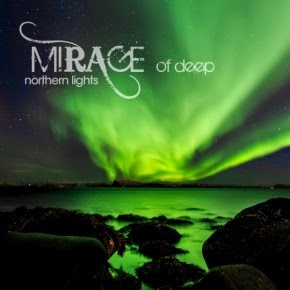
Mirage of Deep - Northern Lights
I've been downloading material by Spanish duo Mirage of Deep for a few years now. On the Lemongrassmusic label, Mirage of Deep have delivered widely varied ambient soundscapes and consistently refused to sit still. The duo really seem to explore new sounds and evolve over time. I believe their debut was 2009's Deep Flow, which sported the lounge ethos of the period (albeit quite well done). My first purchase was the 2010 EP Talking To Stars, which found them experimenting with astral-sounding ambient. That same year the "Luxury Living Room" single kept their lounge side going. Lounge and ambient were merged for their 2011 full-length Talking Earth, which was followed by my next purchase from them: 2011's ambient and nature-themed EP The Garden of Gaia. This EP took their ambient sound into a more musical arena, while at the same time incorporating different instruments (of which I can't tell what - if anything - is acoustic vs. programmed). The increasing complexity and evolution of their sound did not prepare me for Northern Lights. I've only recently picked up this full-length, but my initial reaction is to be dazzled by the breadth of music, instrumentation, confidence, and styles. Listening to this music truly fires your imagination and takes you on a voyage. The album that immediately comes to mind as a point of comparison is Vangelis' ambitious, beyond-fantastic, and genre-bending El Greco. If you like ambient music, Northern Lights is an essential purchase. It's literally a tour de force, including a mind-blowing remix of "Cloudless Sky" from The Garden of Gaia as well as an album length continuous mix. Aside from the high quality, the sheer volume of music offered on this release is overwhelming.

Charles Bruffy & the Phoenix Chorale - Northern Lights: Choral Works by Ola Gjeilo
Coincidentally, this classical music CD has the same title as the Mirage of Deep album. An award winning and critically acclaimed release, Northern Lights is heavenly sounding Christian religious music. To think that it was written by a contemporary Norwegian composer/pianist in his mid-thirties rather than excavated from some five hundred year old Italian cathedral is amazing. This music is like light: it's open and expansive, pure and wondrous. While I know nothing at all about the chorale music genre and do not follow it in any way, the sense I get from this music is that the composer and arranger have preserved the feel of traditional Christian chorale music while at the same time adding a bit of contemporary gloss (i.e., there can be just a touch of Enya here and there...in a good way). I learned about this CD via local classical music station WFMT. Probably the first time in over a decade that a radio station has introduced me to new music (which is a sad comment on today's music industry). This is uplifting, beautiful music that transcends spiritual persuasion.

Triptykon - Melana Chasmata
On the other side of the spectrum, black metal's Triptykon have released their latest album. As anyone in the black metal scene knows (and as band leader Tom Gabriel Warrior continues to remind us in his liner notes), Triptykon formed after an exciting, but ultimately abortive, regrouping of the classic band Celtic Frost. Triptykon's first release, 2010's Eparistera Daimones, made it very clear the new band - while different - was able to fill the void left by Celtic Frost. While this debut was phenomenal, I have to say Melana Chasmata is even better. Warrior no longer needs to prove his chops; he's clearly got the goods (and has had them for decades). So the improvement - this is me totally guessing - might be the result of the band having an even better feel for how to play together. The 2010 single "Shatter"is a good indicator of what to expect on Melana Chasmata. This music is dark, dark, dark. Sonically, it pummels like Godzilla on a rampage yet still manages to sound like oozing, Dantean sludge. Oddly, one of the reasons for this enhanced attack appears to be the inclusion of standard pop arrangements, notably on "Breathing" and "Aurorae". While I'm sure this thought turns the stomach of any true black metal fan, these structures make the music sharper and more evil sounding. It's like having a hurricane channeled into a PVC pipe before the floor drops out for a harrowing guitar solo of doom and despair. While fortifying their credentials for abusive thrash, Triptykon continue to push the envelope in terms of what black metal can do and be. The question one is left with is: how much better can this band possibly get?

Monday, May 26, 2014

Mumonkan, Koan 27: Nansen's "Not Mind, Not Buddha, Not Things"

A monk asked Nansen, "Is there any dharma that has not been preached to the people?" Nansen answered, "There is." "What is the truth that has not been taught?" asked the monk. Nansen said, "It is not mind; it is not Buddha; it is not things."

If this is what has not been preached, then nothing has been preached. That is, in fact, what Nansen means. The truth cannot be taught; we must learn it for ourselves.

Monday, May 19, 2014

Why Abstract Art is Art

Franz Klein Mahoning 1956
Oil on canvas, 203.2 x 254 cm
Convincing people that full abstraction is reasonable art can be a difficult challenge, even though we are coming up on a full century in which abstraction has been a major component of painting. A while back, I set myself a challenge to write an essay for Zen Throw Down that might persuade 'non-believers' to consider abstract painting as art rather than automatically rejecting it. I've been letting the subject marinate in my had for some time, and I think I have something that's reached a form in which it can be shared.

In my experience, the main obstacle in persuading someone to accept an abstract painting like Franz Klein's Mahoning as art is the knee-jerk reaction to say it is "meaningless" or (even more often) that it is "something anyone could do".  So perhaps this is a good place to start. If we can get a person past this initial, visceral "aw, heeeeell no!" reaction, then there is a better chance to convince them to consider each painting individually and give it a chance, rather than simply writing off dozens of great artists and thousands of paintings for no reason except that they are abstract. To attempt more than this is probably not realistic since, as with any art movement, abstract art has its share of crap to dig through in order to find to the good stuff. So I'm not trying to convince anyone that all abstract painting is art, only that it can be art.

So let's start with the "anyone can do it" objection. To deal with it, we need to understand its subtext. When someone raises this objection, what I think they are saying is that they - and all of us in general should - expect an 'artist' to exhibit a technical ability or talent in portraying physical objects or people that sets their work above that of a non-artist. In short, they need to see evidence of talent. This is totally reasonable. To think otherwise would be to believe that masterpieces are no better than random bird droppings on a sidewalk. [As an aside, there are people in the art world who would say this is in fact true. However, such a position is not tenable since it would be foolish to create or buy art while claiming it doesn't exist.]

Despite it being reasonable on the surface, the problem with the "anyone can do it" position is that technical ability (of any kind) is not the most important thing in determining how good a painting is. In fact, it's not the most important factor for determining quality in any branch of the arts. While technical ability is certainly one avenue to judge the quality of a painting or an artist, there are plenty of technically proficient artists out there whose paintings are dull and uninteresting. Similarly, just because someone can write grammatically perfect sentences does not mean that we automatically assume they are capable of writing a novel anyone would want to read.

To illustrate this point more deeply, let's draw an extended analogy in music. A person can be taught to read music, play scales, and understand tempo. However, such technical ability does not bring emotion, relevance, meaning, or individual flair to anything that person might compose or perform. It doesn't make you a good musician. For example, there is nothing technically complex about early Elvis Presley music, the opening bars of "Stairway to Heaven" are fairly easy to play, and Ice Cube's gangsta rap doesn't require the ability to read music. Technical proficiency isn't what sent Elvis Presley into the stratosphere. Technical proficiency isn't the main reason "Stairway to Heaven" remains one of the great rock songs of all time. Technical proficiency isn't the reason rap music captured the imagination of a generation. What Presley, Zeppelin, Ice Cube and other great performers brought to their performances - their personal vision - is a critical part of what sets their work (and them) apart. Many people would argue it's the most important ingredient. In other words, 'you ain't got a thing, if you ain't got that zing.' For a true artist, whatever technical ability they possess supports their artistic vision, not the other way around.

Joan Mitchell Beauvais 1986
oil on canvas diptych, 110 x 157.5"
The same is true in modern art. It is wrong to dismiss abstract art as "something anyone could do" because - as in the music examples above - the best measure of a painting is not its technical execution. [As an aside, it must be pointed out that abstract paintings are - even from a technical angle - not "something anyone could do". Works such as Beauvais by Joan Mitchell require technical abilities related to working with oil, applying paint, and an understanding of color that not any random person picking up a brush possesses.]

So artists can display technical ability whether they are painting a landscape, a portrait, or something abstract. However, it is ultimately the quality of the artistic vision that an artist brings to the painting that distinguishes real art (abstract or representational) from trash.

Artists recognized this distinction centuries ago, and they acted on it long before the radical painters of the 20th Century assertively abandoned representational art. Pinpointing precisely when this realization became an active practice is not easy, but the earliest 'earthquake' likely occurred in France during the late 1800's. Examples include Cezanne, who abandoned a strictly realistic depiction of people and objects. There are also the imaginative compositions of Van Gogh, Gaughin, and others (lumped into the catch-all category of Expressionism). Many of these paintings are not especially realistic in what they portray or how they are painted. Instead, color and form primarily serve the artist's personal vision, not the goal of depicting anything in a technically 'correct' manner.

The most widely known example is the Impressionist movement. These painters intentionally blurred colors and dissolved shapes despite this being a less technically correct means of painting. For the Impressionists, depicting how light impacts the appearance of objects was far more important than a clinical reproduction of a scene from reality. Notably, late paintings by Claude Monet (such as The Water-Lily Pond) are very close to the abstraction many people deride in 20th Century artists. To go further, it's easy to see similarities between The Water-Lily Pond and Mitchell's Beauvais. While Monet's lily pond paintings all have a well-known subject, the fact is there's only the most tenuous attempt at representation in some of these works. They are just a hair's breadth away from Mitchell's abstraction.
Claude Monet The Water-Lily Pond 1917/1920
oil on canvas, 301 x 200.5 cm

While these are the most easily recognized examples, such deviations from reality in favor of artistic vision actually extend much farther back. In many classic works of art - even something as sacrosanct as Michelangelo's work on the Sistine Chapel - we routinely ignore that they are laid out to eschew the normal laws of physics. Some famous Sistine Chapel images are not realistic. For example, Michelangelo depicts God carried by tiny children floating in the air to touch Adam's finger. From the same period, any number of Madonna and Child paintings present the baby Jesus with an adult posture and expression. None of this is realistic; it represents a choice by the artist to deviate from reality in order to more accurately communicate or portray the desired theme or meaning. In all these cases, the deviation is acceptable to us because most of us would agree that what the artist wishes to express is more important than simply creating a slavish reproduction of an object, landscape, or person.

The reason the experiments of the Impressionists and Expressionists were so revolutionary was that they codified the deviations. Theirs was a systematic and actively pursued assertion of the artist's vision trumping displays of reality. As such, artists like Monet, Van Gogh, and Cezanne set the stage for 20th Century artists to go even further. 20th Century artists regularly wrote manifestos explaining and/or justifying the intent of their new visions for art. With such determined activity, new movements (with principle artists) sprung up all over Europe. Fauvism (Matisse), Cubism (Picasso), Surrealism (Dali), and many more openly placed artistic vision in the ascendant. Personal style trumped technique, realism was passe, and subject matter was only a means to an end.

The revolution continued (and perhaps culminated) with the Abstract Expressionist movement of the 1950's, which included artists such as Pollock, Rothko, Mitchell, and many, many more. A famous example of this movement is Jackson Pollock's Blue Poles. Again, as you look at this painting, think about the ways it is similar to Monet's The Water-Lily Pond. In part, Pollock is standing on Monet's (and others') shoulders and simply moving further in the same direction. The same is true for the whole abstract art movement compared to prior movements.
Jackson Pollock Blue Poles 1952
oil on canvas, 6' 11" x 15' 11"

Despite this fact, while Monet, Cezanne, and Van Gogh are deified by most people, the Abstract Expressionists and other later movements (e.g., Minimalism) are flatly rejected. Most often this rejection occurs because the works are not a painting of anything, which is ultimately the "anyone can do it" objection. The reason art geeks tend to look askance at this objection is that many people who use it to reject Abstract Expressionism accept all the experiments of all the Monets, Picassos, and Van Goghs that led up to abstraction. If you think about it, that is somewhat akin to loving the movie Star Wars but, when the Death Star is destroyed, claiming the movie has jumped the shark. How can you like all the stuff that led up to this logical conclusion and then reject the logical conclusion?

The other objection to abstract paintings like Blue Poles and Beauvais is that they are "meaningless". But this objection doesn't really hold water either. And for the same reason: lack of consistency. After all, what is the meaning of The Water-Lily Pond? What is the meaning of a Van Gogh sunflower still life? We accept many works of art as masterpieces knowing full well they have no intrinsic prosaic "meaning". We love them because they represent the artist's unique vision/style and/or because they speak to us on some level. The thing is that accepting a painting as art for this reason is ultimately the point of Abstract Expressionism. If prior artists could express themselves when ditching form (Monet), single perspective (Picasso), realistic use of color (Matisse), or even reality itself (Dali), then why can't a Pollock, Mitchell, or Rothko express themselves without the use of subject matter? In a very real sense, the move to full abstraction is the Death Star blowing up at the end of a Star Wars movie that began with Cezanne, Van Gogh, and the Impressionists.

Mark Rothko No. 14 1960
oil on canvas, 291 x 268 cm
The other, and far more damning, problem with the "meaningless"argument is that it assumes the only possible meaning a painting can have is one the artist intends or portrays through the objects he paints. This doesn't make any sense. What is often the case - in poetry, music, literature, and painting - is that the meaning of a piece is something of our own. something we bring to the painting/song/poem. It's our interpretation that gives the work meaning.

For example, for me, the meaning of Rothko paintings (such as No. 14) is that they visually represent the correct mind state achieved in Zen Buddhism. The simple composition of No. 14 suggests to me a Zen altar; the colors bring to mind the experience I have have during zazen. The colors and shapes in his paintings vary and, with each variation, they suggest a different kind of meditative state to me: euphoria, early morning quiet, even a seasonality at times. So, for me, there is a Zen Buddhist spirituality in Rothko's paintings. This makes these painting deeply meaningful to me.

I have no idea if my interpretation matches Rothko's intended meaning (or if Rothko had an intended meaning). I have not read much about Rothko as a man. But it really doesn't matter. Whether Rothko intended this meaning or not, this is what his paintings mean to me, and they have this meaning despite the fact that they are not paintings of anything. Abstract art can have profound meaning, especially when we bring something to the table.

Now I don't mean to suggest that we can never say something produced by an artist is meaningless without being accused of not bringing anything to the table. That would be giving a blank check to every hack painter on the face of the Earth. However, I will say that dismissing an entire movement of art and decades of output based on a knee-jerk response/dislike of abstraction is narrow-minded and lazy.

So with the "anyone can do it" argument  and the "meaningless" argument demolished, there really isn't a logical reason to dismiss abstract art as a whole. Of course, this doesn't diminish any ones right to their subjective taste. People have the right to dislike any painting or painter. Sometimes we just don't like something. Period. That's a legitimate reaction to any piece of artistic output. My purpose in this essay is to attempt a persuasive argument against using the knee-jerk anti-abstraction response as a legitimate assessment of a movement. To say that we can't dismiss abstract art as a whole for these reasons.

Image: Petra Tornado
To conclude, I'd like to share a quote from a brilliant thinker: Guillaume Apollinaire. Apollinaire was a poet, activist, critic, celebrity, and free spirit who knew and was allied with Picasso and other great modern artists to be in Paris during the early 20th Century. He saw the greatness of many of these artists before most anyone else and, in some cases, is heavily responsible for us knowing about them at all. He even is credited with inventing the word 'surrealism'. He wrote extensively about modern art and, in his awesome essay 'On the Subject of Modern Painting' (written in 1912), he does the best job I've ever read of explaining why modern art and by extension, abstract art, is legitimate.
"If the aim of painting has remained what it always was - namely, to give pleasure to the eye - the works of the new painters require the viewer to find in them a different kind of pleasure from the one he can just as easily find in the spectacle of nature...In listening to a concert, the music-lover experiences a joy qualitatively different from that he experiences in listening to natural sounds, such as the murmur of a stream, the rushing of a torrent, the whistling of the wind in the forest, or to the harmonies of a human language founded on reason and not on aesthetics. Similarly, the new painters provide their admirers with artistic sensations due exclusively to the harmony of lights and shades and independent of the subject depicted in the picture."

Excellent food for thought. Thanks Guillaume!