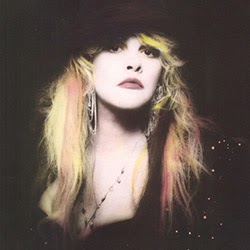
I was excited to see Fleetwood Mac in Chicago (that's actually the name of one of the band's early records), and it was a strong show. While upper ranges are long gone and Stevie Nicks' twirling far less frenetic than in the old days, Fleetwood Mac - rejoined by Christine McVie - was credible and in no danger of tarnishing their legacy.
With McVie back in the band, there is a lot less space for Nicks' and Buckingham's songs in the set. That was a good thing in that some less deserving material (mostly Buckingham's who is the least consistent songwriter of the trio) is out. On the other hand, it meant there were very few surprises in the set list. No digging into the depths of Tusk for nuggets like "Storms" and "Beautiful Child", although the band did provide an spirited rendition of "I Know I'm Not Wrong". Aside from that song, the only semi-surprise was the inclusion of "Seven Wonders". Given the track's recent use in American Horror Story, I suppose its appearance isn't a true surprise. The other casualties were solo material and any songs during McVie's hiatus. No "Stand Back", "Go Insane", or anything from McVie's In the Meantime. Say You Will was completely ignored even though the title track would have made a nice bit of resonance for McVie's return, as well as being a song that begs for her vocal harmonies to put it over the top.
While one of Fleetwood Mac's greatest refrains is singing "don't you look back" during "Don't Stop", this show did nothing but look backwards. Over half the set list was pulled from Fleetwood Mac and Rumours, with ten out of twelve possible songs from the latter. Mirage and Tango in the Night were represented only by the hits, and nothing after Tango made the set list. While the predictability was a definite minus, with a band that has this much history it's hard to fault them. This set list is what people coming to the show want to hear, and the band rarely sounded like they were just going through the motions.
McVie's return meant some of the band's biggest hits were back ("Over My Head", "Say You Love Me", "Little Lies"), and it was absolutely fantastic to see/hear McVie practically silence the arena as she performed "Songbird" to close the show. I admit that I was watching McVie during the night to see how "rusty" she might be after sixteen years off of touring, but she betrayed no overt weakness. She did a little solo keyboard run during "Don't Stop" that was fun, and she was still rocking the accordion on "Tusk". If I had one wish, it would have been to hear her deliver "As Long As You Follow" instead of "Everywhere" (which has always been limp on stage). And if I had another wish, it would be to fit in a pre-Buckingham Nicks cut from McVie ("Homeward Bound" or "Just Crazy Love").
Nicks, who has just released her latest solo album 24 Karat Gold, is experiencing something of a popular renaissance and was in fine voice all things considered. She did an especially good rendition of "Gold Dust Woman", calling forth the dark mysticism of her performances from Mac's heyday. As a die-hard Nicks fan, I was thrilled. At the same time, between her solo work and Mac work I'm getting a bit tired of "Landslide" and "Silver Springs". I have to admit I was hoping "Angel" might make an appearance over "Sisters of the Moon", which is superfluous in a set that includes both "Rhiannon" and "Gold Dust Woman". That said, Nicks got to me with "Landslide". It certainly didn't hurt that the entire audience seemed to be singing the song with Nicks.
The guitar work of Lindsey Buckingham, more than ever, is the fire in belly of this band. Supported by the apparently ageless stomp and throb of Mick Fleetwood and John McVie, his guitar work was by turns gentle, rocking, and - on his solos - searing. His solo on "I'm So Afraid" was mind-blowing in its intensity, ultimately making the song beside the point. His finger picking on "Big Love" is as dizzying as ever. To see someone playing at the speed he was often playing at and not once look down at his fretboard (and sometimes keeping his eyes closed) is inspirational to anyone who plays guitar. Sure, he's a bit pompous (the Wizard of Oz projection of his face during one song was a painfully humorous example of ego gone amok) and, yeah, his talent as a producer is overstated, but as a guitar player you simply cannot ask for anything more. He's a genius of that instrument!
There is talk of a new Fleetwood Mac album. Given the quality of music and performances being put out by these five - either in playing old material during this tour or in their recent solo output - it should be an album worthy of the attention Fleetwood Mac's supergroup status will undoubtedly attract.
Sunday, October 19, 2014
Saturday, October 18, 2014
Zazen in the Modern Age
Finding time for zazen is a challenge while living in the modern world. However, since few of us can retreat to a monastery to pursue our studies, we must find ways to do so within 'the real world'. This is especially important for anyone who – like me – leans towards the Soto school, which stresses the primacy of zazen in Zen practice.
One of the hurdles many people may face is finding the 'right' place in which to sit. There is tendency to gravitate towards a quiet spot outdoors or a room where we can listen to special music or a table where we have candles and a Buddha statue. Time of day can have an impact too, as we tend to prefer sitting when outside noise or interruptions are at a minimum. These preferences partly stem from popular images about what serious meditation looks like. However the preferences also arise because, when we first learn to sit in zazen, it's easier to do so in a controlled environment. After a while, this preference becomes habit and then hardens into practice.
The problem with this is that zazen is how we learn to discipline the mind. As a result, we should be developing the discipline to sit in zazen and reach samadhi in less than ideal situations. If we never learn to do so without pretty candles, the right music, and/or total quiet, then we clearly are not developing much control over our mind and thoughts. It isn't really zazen. It's an emotional indulgence with no more spiritual power than getting a foot massage, taking a hot bath, or indulging in a chocolate dessert. These activities also induce a sense of peace or happiness, but they do not teach mental discipline or help us get to Everyday Zen.
Candles, music, lighting, and favored quiet spots are crutches. They can be justified - perhaps - for the beginner but, as we learn to discipline our minds, we shouldn’t need the cooperation of the world to practice. We shouldn’t need do-dads or gizmos or pretty sounds to create the right ambiance or 'get in the mood'. A fundamental point of Zen is that our environment does not dictate our mental state; we do! So, ultimately, a truly disciplined practitioner would be able to sit in zazen and achieve samadhi with bugs crawling all over them, a jack hammer rattling away, and the smell of garbage wafting about.
My arrival at this realization was probably very atypical. It happened because my first experience with the power of zazen occurred almost twenty years ago, long before I was a Zen Buddhist or had engaged in any form of meditation. Far from being achieved while I was sitting in a quiet room with wind chimes tinkling around me, my first conscious experience of samadhi was while I was sweaty and gross and in the middle of practicing karate in a dojo.
So here's the story. In the dojo, our sensei would have us do forms - that is, a specified series of blocks, kicks, and punches done in smooth succession. He'd correct or make us start over again depending on any errors we made, because we had to get the forms right to be allowed to test for the next belt. As a student new to martial arts, I really had to focus because it's not just doing the moves in the right order but making sure form is correct throughout: How's the angle of my back foot? Is my fist at the right height when I punch? Are my fingers making a correct fist? Am I facing the correct direction? You get the idea; it's a lot to get right over the course of ten to twenty moves.
One day, I came to the dojo pissed off (about what I can't remember). I was steamed and annoyed and tense, and I'd been that way most of the day. After class, though, I had completely calmed down. I had simply stopped thinking about and feeling about whatever it was that had riled me. Obviously, the physical exertion of practicing karate was an outlet that must have helped. But, as I thought about it while leaving the dojo, I realized what had really led to my change of mood was not a gradual change due to physical exertion. It was a relatively quick change that occurred while I had been practicing forms.
What happened? The focus required to do forms in the proper manner forced me to rein in my mind. Instead of letting external situations and my emotions dictate my mental state and carry me away, I was focused on what I was doing in the moment...and nothing else. There was no past, there was no future. All I was concerned with was my forms. And it was a healthy focus. I was not worried about doing well, stressed about it, or anything like that. The focus of my mind was simply limited to the action of the moment. In fact, while I was very alert about what I was doing, I'm not sure I was thinking about anything at all.
As I walked home, totally sweaty and tired, I nevertheless felt mentally reinvigorated and was very happy. At the time, I'd read a tiny bit about meditation though I knew nothing about Zen Buddhism. I specifically remember thinking as I walked home that "there's something to this" and that I needed to explore it.
So here's the story. In the dojo, our sensei would have us do forms - that is, a specified series of blocks, kicks, and punches done in smooth succession. He'd correct or make us start over again depending on any errors we made, because we had to get the forms right to be allowed to test for the next belt. As a student new to martial arts, I really had to focus because it's not just doing the moves in the right order but making sure form is correct throughout: How's the angle of my back foot? Is my fist at the right height when I punch? Are my fingers making a correct fist? Am I facing the correct direction? You get the idea; it's a lot to get right over the course of ten to twenty moves.
One day, I came to the dojo pissed off (about what I can't remember). I was steamed and annoyed and tense, and I'd been that way most of the day. After class, though, I had completely calmed down. I had simply stopped thinking about and feeling about whatever it was that had riled me. Obviously, the physical exertion of practicing karate was an outlet that must have helped. But, as I thought about it while leaving the dojo, I realized what had really led to my change of mood was not a gradual change due to physical exertion. It was a relatively quick change that occurred while I had been practicing forms.
What happened? The focus required to do forms in the proper manner forced me to rein in my mind. Instead of letting external situations and my emotions dictate my mental state and carry me away, I was focused on what I was doing in the moment...and nothing else. There was no past, there was no future. All I was concerned with was my forms. And it was a healthy focus. I was not worried about doing well, stressed about it, or anything like that. The focus of my mind was simply limited to the action of the moment. In fact, while I was very alert about what I was doing, I'm not sure I was thinking about anything at all.
As I walked home, totally sweaty and tired, I nevertheless felt mentally reinvigorated and was very happy. At the time, I'd read a tiny bit about meditation though I knew nothing about Zen Buddhism. I specifically remember thinking as I walked home that "there's something to this" and that I needed to explore it.
So I learned very early that we can practice zazen and reach samadhi in non-traditional environments, and we don't necessarily need a ton of training to do it. Doing it is important, not only for ensuring we really are learning to discipline our minds, but that we can practice Everyday Zen. So if it's hard to find time to sit in zazen, think about some time during the day that may not seem ideal but that actually should be. Getting off the bus a few stops early to walk, eating lunch at your desk, sitting on the train. And, importantly, don't mourn about the noise and distractions around you. Use them to help you hone your discipline.
Thursday, September 25, 2014
Stevie Nicks - In Your Dreams (2011)
To wind-up my series of Stevie entries - leading up to the October 7th release of her new solo album 24 Karat Gold - I'm reposting a version of my original review of In Your Dreams.
30 years after Bella Donna established Stevie Nicks as a
force to be reckoned with in or out of Fleetwood Mac, she was still able to command interest from the music industry. That said, the ten years
since her last studio album, Trouble in Shangri-La, saw Nicks seemingly headed out to pasture. She'd been touring regularly but without new material and had dropped two compilation albums: Crystal Visions and The Soundstage Sessions. All idea that Nicks was headed for retirement was banished by In Your Dreams. It's that good. Even Rolling Stone, which had panned or downplayed most of Nicks' work since she joined Fleetwood Mac in 1975 gushed about this release.
And for good reason. If In Your Dreams turns
out to be the capstone of Nicks' career, then she's going out on a very high note.
However, the album ultimately suggests it would be a shame for her to
stop recording as she obviously has a lot of great music left in her. Simply
put, In Your Dreams is her best album since The Wild Heart and it is the best
solo effort of her career in terms of merging her mystical and rock sides.
Lyrically, In Your Dreams is the most open album of Nicks'
career, reminding us that Nicks is at her best when her moony mysticism and
snaky incantations are married to sassy rock and roll attitude. This marriage
is partly achieved by Dave Stewart's melodic and tight production. He rarely
ventures into the meandering over-instrumentation that has haunted every Nicks
solo album since The Wild Heart, yet he lets Nicks breath and indulge in the
drama that has always formed the core of her allure. He 'gets' Stevie, and his production lets her be herself.
Nicks responds by giving tremendous, emotional performances. While there's no question her voice isn't what it used to be, she seems to have accepted that her
sultry vibrato is a thing of the past and is vigorously working what she has. The result is she sounds alive, energized,
and happy throughout the disk, as if she's really into what she's doing and
comfortable with it. In fact, I don't think she has sounded so utterly invested
all the way through an album since...again, The Wild Heart.
The songwriting on In Your Dreams is very direct and
straightforward, yet full of dreamscapes and flights of fantasy. The sound is lush and full of sonic details that support the
mood of the songs. There is really no way to pick a favorite song, as they each touch different emotions. And Nicks masterfully alters her vocal delivery
for each of them. There's her always alluring, overgrown romanticism
('Moonlight', 'Italian Summer'), hooky pop tunes ('Secret Love', 'New
Orleans'), country twang ('For What It's Worth'), thoughtful ballads ('You May
Be The One', 'Cheaper Than Free'), a dirge that verges on slowed down black
metal ('Soldier's Angel'), an upbeat take on Edgar Allen Poe ('Annabel Lee'),
and straight ahead rock (the title track). Even the to-be-expected loopy tracks
('Wide Sargasso Sea', 'Ghosts Are Gone') work. The only song that suffers by comparison to the rest of the material is 'Everybody Loves
You', which sounds like a Eurythmics song.
As on Trouble in Shangri-La, most of the best songs are the
ones Nicks writes on her own. So if I were to ding In Your Dreams, it would be
for Nicks' continuing reluctance to step up the plate and write more of her own
material. She also continues to cull her spellbook for songs from the past (this time, fantastic gems 'Secret Love' and 'Annabel Lee'). But these are minor quibbles. The quality and energy of this album will no doubt go down as one of
the biggest surprises of the year. Nicks knocked this album out of the
ballpark!
Sunday, September 21, 2014
Mumonkan, Koan 29: The Sixth Patriarch's "Your Mind Moves"
![]() |
| Prayer flags in the wind, Nepal Photo: Stefanie Buehler |
The argument is based on interpreting what one sees with the mind, rather than simply having direct experience in the moment. As such, there is no right-mindedness while the monks argue about what is happening. They are removed from the moment. This is what is meant by "it is your mind that moves."
The argument is one of delusion since it is the debating of interpretations of reality - what each monk thinks about what they see - rather than reality itself. The distancing from reality is actually three-fold. First, there is the interpretation of reality. Second, there is the evaluation of the other monk's interpretation. Then third, there is the comparison of the evaluations against one another. Once we let our minds "move", we are quickly swept out of the moment and away from the moment into an intellectual hall of mirrors that is merely delusion.
The Sixth Patriarch was chastising the monks for their lack of discipline.
Saturday, September 20, 2014
The Difference Between Contentment & Happiness
In various places on Zen Throw Down I've drawn a distinction between happiness and contentment. While I love happiness and joy (and who doesn't?), I've come to understand that it's much wiser to seek contentment than happiness. This is mainly because contentment requires no striving and can be maintained in a world that is full of suffering. On the other hand, happiness constantly demands effort to obtain, disappears all too easily, and/or is merely a mirage on the horizon that beckons without getting closer.
This view of happiness runs counter to how many of us are raised. For example, in the United States the "pursuit of happiness" is inherently woven into our national identity. Cultures may differ, but the desire for happiness seems universal. Zen Buddhism, however, teaches us that happiness is something to cherish when one has it...but that one should never cling to it, mourn when we inevitably lose it, or chase after it.
![]() |
| Memes are not wisdom |
Lastly, and most importantly, one can't be taught to be happy because happiness itself is a temporary condition. No one can maintain it no matter what they are taught. In Zen Buddhism we are taught that all beings suffer; it is simply part of life. So it is foolish to cling to happiness or to try avoiding all suffering because we cannot maintain the one or avoid the other. Further, both states are temporary. We are happy until something goes amiss, and then we suffer. We suffer until things start going our way again, and then we are happy.
This circle of joy and suffering drags most people into a deluded mindstate, as they spend all their energy trying to evade suffering or to capture happiness. This is all wasted energy because no matter how happy we become, suffering will always eventually come back to us. In short, trying to maintain happiness as a permanent state is like trying - to quote a lyric from The Sound of Music - "to keep a wave upon the sand." We waste our time and energy running around in this circle.
This is why contentment is a better goal that happiness. While happiness is the absence of suffering, contentment allows for suffering. To explain what is meant by this, imagine a time when you were suffering. It's unlikely you could have said to yourself: "Everything is so awful, but I'm happy anyway!" (If you could say this, then it's questionable whether you were really suffering!). However, it's totally possible - especially from within a disciplined, centered mindstate - to be unhappy and yet to be content on some level.
We can be content even when we suffer because, despite the pain or sadness or anxiety we feel we can look at ourselves in the current moment and know that we're okay. We may not be happy, but we are able to let things slide off our backs and be patient with ourselves.
And this is the crux of the difference between happiness and contentment: while happiness vanishes the second anything goes wrong, contentment can be maintained even in quite averse circumstances.
Monday, September 1, 2014
Stevie Nicks - The Soundstage Sessions (2009)
As the new millennium proceeded, Stevie Nicks found herself increasingly in demand as a rock icon and institution. Little wonder she continued revisiting old material with releases like Crystal Visions and - in 2009 - this live performance in Chicago entitled The Soundstage Sessions. However, this focus meant it was getting close to a decade since the release of her her last studio album of new material (Trouble in Shangri-La).
Surprisingly, Nicks has never released a live solo album before. Given her strength as a performer and her penchant for reworking her lyrics and phrasing to create fresh versions of her songs when they are performed live, this is a major hole in her discography. The Soundstage Sessions fills this gap but, between Fleetwood Mac tours without new material to support and her lack of new solo material, one begins to wonder if Nicks is winding her career down to coast on her laurels. While I watched and enjoyed the PBS Soundstage airing of this show, I did not buy the CD. I just didn't feel the need to own these tracks or, more exactly, I already own most of them in several versions.
To Nicks' credit, The Soundstage Sessions avoids a too obvious set list. Most conspicuous in their absence are "Rhiannon" and "Dreams", despite their inclusion in the live show. From her solo work, there is no "Stop Dragging My Heart Around", "Leather and Lace", or "Talk to Me" (not sure if these were part of the live show or not). That means most of her biggest hits are not included on The Soundstage Sessions. Despite this, the selection of songs contains several big hits and concert/fan favorites. On the downside, the sequencing of the set feels off. The energy level spikes and then lulls for long periods before spiking again. Keeping more of the spunkier songs from the concert (e.g., "Enchanted") would have made The Soundstage Sessions flow a lot more smoothly and increased its novelty.
The album kicks off with a rocking version of Nicks' most alluring hit of all: "Stand Back". She cooks through this number like a Welsh witch steamroller. Right away, you hear Nicks is letting her voice sail sans her trademark vibrato. Time - and perhaps substance abuse - have eroded her vibrato but she sounds great when she emphasizes energy over holding onto vocal stylings she may simply not be capable of anymore. It's a triumphant kick-off that instantly confirms Nicks still has the goods live.
However, the energy immediately slows down as Nicks covers Dave Matthews "Crash Into Me" and then goes into "Sara". During these songs, especially "Sara", I found myself wanting more presence from Sharon Celani and Lori Perry Nicks'. I felt this many times during the rest of the album/show. It's not that Nicks needs them for vocal camouflage, it's just that her two back-up vocalists have always been a big part of her sound. Their harmonic lushness always contrasted and mixed wonderfully with Nicks' alternately raspy rock and gentle twang. Their efforts could have livened up "Sara" and several other tracks, yet they repeatedly seem to be auto-tuned into a nondescript blob and then pushed way back in the mix.
A sturdy performance of "If Anyone Falls" ups the energy level, despite a cheesy synthesizer, but then the pace slows down again for "Landslide". While the song is a 'must' for Nicks to perform, committing a third live version to disc within the space of ten years is overkill. Another song with less exposure would have been a better choice for this album. "Landslide" is followed by the only weak point of the show: a seven-plus minute, self-indulgent performance of "How Still My Love". This okay song has somehow persisted in Nicks' concert set since 1981, despite dozens of better alternative song choices on more recent albums. "Rooms on Fire" or even "Blue Denim" would have been much more interesting inclusions.
After a nice, but unremarkable, reading of Bonnie Raitt's "The Circle Dance", Nicks finally amps up again for "Fall From Grace" and "Sorcerer" from Trouble in Shangri-La. The disc then coasts through the lovely "Beauty and the Beast" and a ten-minute(!) rendition of "Gold Dust Woman", before finishing up with the obligatory (but admittedly still fiery) "Edge of Seventeen". Waddy Wachtel who, as ever, is the perfect foil for Nicks' though-out The Soundstage Sessions really goes above and beyond on this number.
I never purchased The Soundstage Sessions, despite the obvious gap it fills in Nicks discography and the sheer pleasure of hearing how Nicks remains in fine form. It's a solid album and live performance but, for me, the backwards glancing in Nicks output is simply beginning to wear a bit thin.
Surprisingly, Nicks has never released a live solo album before. Given her strength as a performer and her penchant for reworking her lyrics and phrasing to create fresh versions of her songs when they are performed live, this is a major hole in her discography. The Soundstage Sessions fills this gap but, between Fleetwood Mac tours without new material to support and her lack of new solo material, one begins to wonder if Nicks is winding her career down to coast on her laurels. While I watched and enjoyed the PBS Soundstage airing of this show, I did not buy the CD. I just didn't feel the need to own these tracks or, more exactly, I already own most of them in several versions.
To Nicks' credit, The Soundstage Sessions avoids a too obvious set list. Most conspicuous in their absence are "Rhiannon" and "Dreams", despite their inclusion in the live show. From her solo work, there is no "Stop Dragging My Heart Around", "Leather and Lace", or "Talk to Me" (not sure if these were part of the live show or not). That means most of her biggest hits are not included on The Soundstage Sessions. Despite this, the selection of songs contains several big hits and concert/fan favorites. On the downside, the sequencing of the set feels off. The energy level spikes and then lulls for long periods before spiking again. Keeping more of the spunkier songs from the concert (e.g., "Enchanted") would have made The Soundstage Sessions flow a lot more smoothly and increased its novelty.
The album kicks off with a rocking version of Nicks' most alluring hit of all: "Stand Back". She cooks through this number like a Welsh witch steamroller. Right away, you hear Nicks is letting her voice sail sans her trademark vibrato. Time - and perhaps substance abuse - have eroded her vibrato but she sounds great when she emphasizes energy over holding onto vocal stylings she may simply not be capable of anymore. It's a triumphant kick-off that instantly confirms Nicks still has the goods live.
However, the energy immediately slows down as Nicks covers Dave Matthews "Crash Into Me" and then goes into "Sara". During these songs, especially "Sara", I found myself wanting more presence from Sharon Celani and Lori Perry Nicks'. I felt this many times during the rest of the album/show. It's not that Nicks needs them for vocal camouflage, it's just that her two back-up vocalists have always been a big part of her sound. Their harmonic lushness always contrasted and mixed wonderfully with Nicks' alternately raspy rock and gentle twang. Their efforts could have livened up "Sara" and several other tracks, yet they repeatedly seem to be auto-tuned into a nondescript blob and then pushed way back in the mix.A sturdy performance of "If Anyone Falls" ups the energy level, despite a cheesy synthesizer, but then the pace slows down again for "Landslide". While the song is a 'must' for Nicks to perform, committing a third live version to disc within the space of ten years is overkill. Another song with less exposure would have been a better choice for this album. "Landslide" is followed by the only weak point of the show: a seven-plus minute, self-indulgent performance of "How Still My Love". This okay song has somehow persisted in Nicks' concert set since 1981, despite dozens of better alternative song choices on more recent albums. "Rooms on Fire" or even "Blue Denim" would have been much more interesting inclusions.
After a nice, but unremarkable, reading of Bonnie Raitt's "The Circle Dance", Nicks finally amps up again for "Fall From Grace" and "Sorcerer" from Trouble in Shangri-La. The disc then coasts through the lovely "Beauty and the Beast" and a ten-minute(!) rendition of "Gold Dust Woman", before finishing up with the obligatory (but admittedly still fiery) "Edge of Seventeen". Waddy Wachtel who, as ever, is the perfect foil for Nicks' though-out The Soundstage Sessions really goes above and beyond on this number.
I never purchased The Soundstage Sessions, despite the obvious gap it fills in Nicks discography and the sheer pleasure of hearing how Nicks remains in fine form. It's a solid album and live performance but, for me, the backwards glancing in Nicks output is simply beginning to wear a bit thin.
Saturday, August 23, 2014
Mumonkan, Koan 28: Ryutan Blows Out the Candle
Tokusan asked Ryutan about Zen far into the night. At last Ryutan said, "The night is late. Why don't you retire?" Tokusan made his bows and lifted the blinds to withdraw, but he was met by darkness. Turning back to Ryutan, he said, "It is dark outside." Ryutan lit a paper candle and handed it to him. Tokusan was about to take it when Ryutan blew it out. At this, all of a sudden, Tokusan went through a deep experience and made bows.
Ryutan said, "What sort of realization do you have?" "From now on," said Tokusan, "I will not doubt the words of an old osho who is renowned everywhere under the sun."
The next day Ryutan ascended the rostrum and said, "I see a fellow among you. His fangs are like the sword tree. His mouth is like a blood bowl. Strike him with a stick, and he won't turn his head to look at you. Someday or other, he will climb the highest of the peaks and establish our Way there."
Tokusan brought his notes on the Diamond Sutra to the front of the hall, pointed to them with a torch, and said, "Even though you have exhausted the abstruse doctrines, it is like placing a hair in a vast space. Even though you have learned all the secrets of the world, it is like a drop of water dripped on the great ocean." And he burned all his notes. Then, making bows, he took his leave of this teacher.
This koan is full of metaphor. Inside the room with Ryutan, there are answers and light. As Tokusan leaves, he finds total darkness. There is no value in light and answers which desert a person the moment they leave the side of a teacher. What we do not know in and within ourselves, what we cannot carry with us into the world is not knowledge. Further, light or answers that are given like the candle Ryutan gives to Tokusan can be taken away. That is not possible with true knowledge or insight.
While I do not understand the reference to the "words of an old osho", the meaning of Tokusan burning all his notes is clear. The notes are like the lighted room and are not needed. Everything in the notes Tokusan has either absorbed or not absorbed. The former will not be lost by burning the notes; the latter was never his to lose.
Extending this further, perhaps he also realized his teacher should not be needed either. Either he was enlightened (or perhaps he needed solitude for a while before returning). In a way, entering the darkness or leaving his teacher is a way to avoid staying in the lit room with given answers. It's a way to confront what he does not know rather than stagnate with the security of what he is told. Of course, the other side of this is that we should never view a teacher as exerting such control. We should be able to enter the darkness even while letting the light of a teacher point the way.
Perhaps that is the real meaning of the candle being blown out: "Despite whatever teaching I give you; you must ultimately find your own way."
Ryutan said, "What sort of realization do you have?" "From now on," said Tokusan, "I will not doubt the words of an old osho who is renowned everywhere under the sun."
The next day Ryutan ascended the rostrum and said, "I see a fellow among you. His fangs are like the sword tree. His mouth is like a blood bowl. Strike him with a stick, and he won't turn his head to look at you. Someday or other, he will climb the highest of the peaks and establish our Way there."
Tokusan brought his notes on the Diamond Sutra to the front of the hall, pointed to them with a torch, and said, "Even though you have exhausted the abstruse doctrines, it is like placing a hair in a vast space. Even though you have learned all the secrets of the world, it is like a drop of water dripped on the great ocean." And he burned all his notes. Then, making bows, he took his leave of this teacher.
This koan is full of metaphor. Inside the room with Ryutan, there are answers and light. As Tokusan leaves, he finds total darkness. There is no value in light and answers which desert a person the moment they leave the side of a teacher. What we do not know in and within ourselves, what we cannot carry with us into the world is not knowledge. Further, light or answers that are given like the candle Ryutan gives to Tokusan can be taken away. That is not possible with true knowledge or insight.
While I do not understand the reference to the "words of an old osho", the meaning of Tokusan burning all his notes is clear. The notes are like the lighted room and are not needed. Everything in the notes Tokusan has either absorbed or not absorbed. The former will not be lost by burning the notes; the latter was never his to lose.
Extending this further, perhaps he also realized his teacher should not be needed either. Either he was enlightened (or perhaps he needed solitude for a while before returning). In a way, entering the darkness or leaving his teacher is a way to avoid staying in the lit room with given answers. It's a way to confront what he does not know rather than stagnate with the security of what he is told. Of course, the other side of this is that we should never view a teacher as exerting such control. We should be able to enter the darkness even while letting the light of a teacher point the way.
Perhaps that is the real meaning of the candle being blown out: "Despite whatever teaching I give you; you must ultimately find your own way."
Friday, August 22, 2014
Stevie Nicks - Crystal Visions (2007)
Stevie Nicks kicked off the new millennium with a unexpectedly resounding bang. Her solo album Trouble in Shangri-La shot to #5 on the charts and went gold within a month, then two years later she and Fleetwood Mac (sans Christine McVie) had their own triumphant return to the charts with Say You Will. After that, Nicks was largely busy with Fleetwood Mac's tour, which I saw during their stop in Chicago. It had been a long time since I'd seen Stevie Nicks perform (I saw her during the tours for Rock a Little and The Other Side of the Mirror), and she was in fine form and voice. I'm now looking forward to seeing the fully reunited Rumours-era line-up perform in Chicago this October.
In 2007, a few years after all this chart action, Nicks released Crystal Visions. Despite being a rabid fan, I resisted buying this release because I felt three compilations from Nicks in sixteen years was a bit much. What was the point? Timespace remains Nicks complete greatest solo hits collection since she had not charted any further singles. Meanwhile, Enchanted is her retrospective box set, and one career retrospective is about all most artists need or deserve. What could Crystal Visions possibly bring to table?
For a casual listener Crystal Visions is totally unnecessary, and does not supplant Timespace as the best compilation of Nicks' solo hits. For a fan, though, Crystal Visions is worth buying because it is an interesting take on combining her absolutely biggest solo hits with her most famous songs from Fleetwood Mac. This makes Crystal Visions the closest thing to a total career compilation that may ever be available for Nicks. It might even work better than an actual compilation of studio recordings since I'm not sure it makes much sense from a listening standpoint to set her Fleetwood Mac songs and solo work side by side. The sound of the material - and her sound - is really quite different. Crystal Visions solves the problem by creatively representing her Fleetwood Mac songs in a way that updates them and creates a more cohesive sounding album.
Admittedly, the approach works better for some songs than others. "Dreams" is represented by the appealing Deep Dish dance hit for which Nicks recorded a new vocal, "Rhiannon" comes to us as a rocking live performance. Ironically, the one song that appears in something like a vintage version is "Silver Springs" which was cut from Rumours. That said, Stevie's vocal coda on this take of the song has a tougher edge to it than the official version released on the b-side to "Go Your Own Way" in 1977. Considering the only other way to get an original version of "Silver Springs" is to buy Fleetwood Mac's patchy box set (The Chain), many may prefer to make the acquisition through Crystal Visions. In addition to the pluses, Nicks includes a wicked live performance of Led Zeppelin's "Rock and Roll". On the other hand, "Landslide" is recorded live with an orchestra behind Nicks and comes off a bit overdone. I'm also not sure anyone is a big enough fan to jump for joy over having yet another live version of "Edge of Seventeen" enter their music collection.
Crystal Visions is more than just a set of tracks, however. It also includes a DVD of all Nicks' music videos, complete with audio commentary from Nicks. The commentary reveals a thread of dry humor that is rather endearing when you think about how she's relating stories around the recording and marketing of some of her biggest hits. A special treat on this DVD is the original big production video for "Stand Back", which Nicks famously - and expensively - rejected for a reshoot. The reshoot became the official video everyone has seen. In my opinion, while the original video isn't bad (for the 80's), Nicks was right to pass. The video she ended up for "Stand Back" has a lot more energy and visual appeal. Finally, the DVD also contains footage from the Bella Donna sessions which is interesting to watch.
So, while Crystal Visions is - as ever - a fantastic collection of songs with some great new-ish material on hand, it's really for a die-hard fan who doesn't mind dropping the bucks on an indulgence. One can't fault Nicks too much, though. She's worked very hard over the course of her storied career and accomplished a hell of a lot. If she wants to rest on her laurels a bit, she's certainly earned it.
In 2007, a few years after all this chart action, Nicks released Crystal Visions. Despite being a rabid fan, I resisted buying this release because I felt three compilations from Nicks in sixteen years was a bit much. What was the point? Timespace remains Nicks complete greatest solo hits collection since she had not charted any further singles. Meanwhile, Enchanted is her retrospective box set, and one career retrospective is about all most artists need or deserve. What could Crystal Visions possibly bring to table?
For a casual listener Crystal Visions is totally unnecessary, and does not supplant Timespace as the best compilation of Nicks' solo hits. For a fan, though, Crystal Visions is worth buying because it is an interesting take on combining her absolutely biggest solo hits with her most famous songs from Fleetwood Mac. This makes Crystal Visions the closest thing to a total career compilation that may ever be available for Nicks. It might even work better than an actual compilation of studio recordings since I'm not sure it makes much sense from a listening standpoint to set her Fleetwood Mac songs and solo work side by side. The sound of the material - and her sound - is really quite different. Crystal Visions solves the problem by creatively representing her Fleetwood Mac songs in a way that updates them and creates a more cohesive sounding album.
Admittedly, the approach works better for some songs than others. "Dreams" is represented by the appealing Deep Dish dance hit for which Nicks recorded a new vocal, "Rhiannon" comes to us as a rocking live performance. Ironically, the one song that appears in something like a vintage version is "Silver Springs" which was cut from Rumours. That said, Stevie's vocal coda on this take of the song has a tougher edge to it than the official version released on the b-side to "Go Your Own Way" in 1977. Considering the only other way to get an original version of "Silver Springs" is to buy Fleetwood Mac's patchy box set (The Chain), many may prefer to make the acquisition through Crystal Visions. In addition to the pluses, Nicks includes a wicked live performance of Led Zeppelin's "Rock and Roll". On the other hand, "Landslide" is recorded live with an orchestra behind Nicks and comes off a bit overdone. I'm also not sure anyone is a big enough fan to jump for joy over having yet another live version of "Edge of Seventeen" enter their music collection.
Crystal Visions is more than just a set of tracks, however. It also includes a DVD of all Nicks' music videos, complete with audio commentary from Nicks. The commentary reveals a thread of dry humor that is rather endearing when you think about how she's relating stories around the recording and marketing of some of her biggest hits. A special treat on this DVD is the original big production video for "Stand Back", which Nicks famously - and expensively - rejected for a reshoot. The reshoot became the official video everyone has seen. In my opinion, while the original video isn't bad (for the 80's), Nicks was right to pass. The video she ended up for "Stand Back" has a lot more energy and visual appeal. Finally, the DVD also contains footage from the Bella Donna sessions which is interesting to watch.
So, while Crystal Visions is - as ever - a fantastic collection of songs with some great new-ish material on hand, it's really for a die-hard fan who doesn't mind dropping the bucks on an indulgence. One can't fault Nicks too much, though. She's worked very hard over the course of her storied career and accomplished a hell of a lot. If she wants to rest on her laurels a bit, she's certainly earned it.
Sunday, August 17, 2014
Stevie Nicks - Trouble In Shangri-La (2001)
Stevie Nicks released Trouble in Shangri-La in 2001, twenty years after her debut solo
album Bella Donna. A great deal had
happened in music - and to Nicks – during those two decades.
That Nicks’ first album of original material in seven years (and her first of
new millennium) could attract interest from an A-list of young performers is an
accomplishment all by itself. And, while Nicks never took her hat out of the ring in terms of recording and touring, Trouble in Shangri-La generates an aura of triumphant comeback. Nicks had survived the rock and roll gristmill and
emerged on the other side as an institution, readily acknowledged as a pioneer paving
the way for many rock musicians, especially women.
Of course, Nicks is no longer the "hot new thing" so to expect another Bella Donna or The Wild Heart from her is unfair and, if someone isn't a fan by
now, there's not much that's going to remedy the situation. What makes Trouble in Shangri-La work is how comfortably it updates Nicks’
mystical take on rock into the current musical landscape. The album
doesn’t sound like something by an old fogey, but it also doesn’t pander to
trends either. Most impressive is that, while Nicks records some characteristic
tunes from her backlog (“Sorcerer” and “Candlebright” are from the early seventies), the strongest songs turn out to be the ones she has written most recently. The title track is dramatic musing on the pitfalls of fame and/or love, "Love Changes" surges
with hard-won hope, "Fall From Grace" is balls to wall rock that
Nicks hasn't recorded since Rock a Little, and the lush ballad "Love
Is" grows more emotive with every listen.
In every way, Nicks is in far better form here than she was on
1994's forgettable Street Angel. That said, she still hasn’t conquered some of her troublesome tendencies. Twangy
"Too Far From Texas" is out of place amid the rest of the tracks. "That
Made Me Stronger" is built around overwrought lyrics and comes off clunkity as a result. And,
again, big production short-circuits the energy of otherwise solid songs (“Planets of
the Universe”, “Bombay Sapphires”). As ever, Nicks shines brightest in simple
surroundings (or at least surroundings that sound simple).
But this is beside the point. Nicks doesn’t have anything to prove anymore. Trouble in
Shangri-La and the 2003 Fleetwood Mac studio album Say You Will both hit the top five, proving Nicks is still
relevant. It’s especially notable that her songwriting on Say You Will (e.g., “Thrown Down”, “Silver Girl”, “Destiny Rules”) was
one of the strongest reasons to buy the album. Where Nicks will go from here is
anyone's guess. Personally, I'd love to see her go back-to-basics and cut an
album of rough gems like the demos she released on Enchanted or at least stick to the low maintenance sonic
surroundings Lindsey Buckingham created for her on Say You Will. Whatever she does, though, Nicks' place in the rock
pantheon is guaranteed both as a member of Fleetwood Mac and as a solo artist
in her own right.
Saturday, August 16, 2014
Stevie Nicks - Enchanted (1998)
With the seventies line-up of Fleetwood Mac reunited and on top
of the charts again with their smash live album The Dance, Stevie Nicks was back in business after a decade of lean
years in the studio. That made a new Nicks’ solo compilation a smart marketing
move. The snag was, given Nicks lack of top 40 hits since “Rooms on Fire”, her
1991 greatest hits album (Timespace)
needed no updating. And, to this day, it still doesn’t.
This must be part of why the powers that be at her label, Modern
Records, went with a boxed set. That said, the allure of boxed sets is somewhat
mystifying. Fans already have all the music except for the one or two new songs
included (which usually aren't anything special). Meanwhile, the casual
listener must view a boxed set as expensive overkill. As such, even a life-long
fan of Stevie Nicks (like myself), must approach the purchase of Nicks’ three-disc
boxed set Enchanted with skepticism. Fortunately,
this release is lovingly designed to appeal to Nicks’ fan base. It truly
justifies the purchase, while also presenting the best of Nicks’ solo material
to draw the less rabid but interested listener. Enchanted did very well upon release, suggesting people were ready
for a tribute to Nicks who was – at this stage of her career – assuming her
rightful place as a rock legend.
The first two discs of Enchanted
focus on her previously released solo material. While the songs are not presented
in chronological order, Disc One does draw heavily from her first two albums - Bella Donna and The Wild Heart - while Disc Two leans towards Rock a Little and the work that came after. The casual listener
will get almost all of Bella Donna
and six tracks off The Wild Heart.
Four or five tracks are taken from her other albums but, since these efforts
were not as consistent, that’s about right. In short, someone could purchase Enchanted in lieu of Nicks’ solo albums
and miss out on very little (see next paragraph for some notable exceptions).
What will appeal to fans about the first two discs is that many of
the tracks are alternate takes to the versions on the albums. Given Nicks’
appealing habit of rejiggering how she sings her songs over time, this variation
is very welcome to a fan. Nothing strange has been done to the songs. They
still have the same sound as the originals, but they have slight, yet notable,
nuance. For example, “Leather and Lace” adds a few extra lines to a verse (it
might be the single version). Three songs taken from Street Angel – as well as “Rooms on Fire” – are alternate versions.
“Whole Lotta Trouble” is the single mix. Further, “Edge of Seventeen” is a live
performance from Nicks’ long-lost 1981 White
Wing Dove HBO special (it was also the b-side to the single), and “I Can’t
Wait” appears in an extended mix lifted from the excellent 1986 maxi-single. There
are also a couple b-sides (google the term if you’re a Millennial): “Garbo” was
a lovely acoustic ballad on the flipside of “Stand Back” and “One More Big Time
Rock and Roll Star” was the b-side of “Talk to Me”. All this makes the first
two discs a lot more interesting to a Nicks fan than they would be otherwise.
Even so, what makes Enchanted
worth the price of admission to a fan is the collection of unreleased and
non-album tracks on Disc Three. Given that much of Nicks’ solo material was
released prior to the advent of compact discs and Enchanted was released prior to the digital music era, Disc Three was
a way for fans to reclaim all that lost vinyl material without spending piles
of money on cheesy movie soundtrack CDs. And there is a lot of great Nicks material
in the soundtrack category. Songs like "Blue Lamp", "Battle of
the Dragon", "Violet and Blue", and "Sleeping Angel" are
just as enthralling as her very best solo work. Even in retrospect, it’s impossible
to fathom why “Sleeping Angel” wasn’t saved for The Wild Heart.
In addition to the soundtrack songs, Disc Three includes several
demos. These stripped down performances offer a peek into Nicks’ creative
process but are also complete enough to be enjoyable listens. It’s not hard to
imagine Nicks including these demos to thumb her nose at rock critics who adore
painting her as dependent on others (i.e., guys) to turn her musical daydreams
into concrete songs. If so, she makes her point. The demos of “Sweet Girl” and
“Twisted” are better than the recorded versions released after Lindsey
Buckingham got a hold of them. Of course Buckingham contributed to Nicks’ work
with Fleetwood Mac, as Nicks readily admits. However, Nicks also states that
she is sometimes mis-produced (I’d add over-produced), so the simplicity and
intimate energy of these demos is eye-opening.
Disc Three is rounded out with several other goodies. Her
energetic performance of "Gold and Braid" from White Wing Dove is included; this is a song she never recorded in
the studio. We also get both of her late seventies’ duets outside Fleetwood Mac
("Gold" and “Whenever I Call You Friend”), a Buckingham Nicks track, and
her spin on Tom Petty’s “Free Fallin’”. The Disc ends with her re-recording the
demo version of “Rhiannon” on piano. All said, Disc Three is a powerful
inducement to buy Enchanted even if
you have all of Nicks’ solo work.
Stepping back, can one quibble with the selection of tracks on Enchanted? It’s a career retrospective
so, of course, the answer is ‘yes’. So here I go… Her remix of “The Nightmare” or
the b-side “Inspiration” would have been preferable to weak material like
“Thousand Days” and “Reconsider Me”. I would have excluded “The Highwayman” in
favor of The Wild Heart’s “Nothing Ever
Changes”. Song selection from Rock a
Little emphasizes material Nicks wrote alone – which makes sense given this
is her boxed set – but “I Sing For the Things” and the convoluted “Rock a
Little” were just nowhere near as well-written or performed as “Sister Honey”
and “If I Were You”. Similarly, the inclusion of “Desert Angel” from Timespace makes sense from a
Stevie-as-songwriter perspective, but it’s a weak track compared to something
like “Ghosts” from about the same period. On a less subjective note, selecting
“Rose Garden” over just about any other track from Street Angel is plain lunacy. “Love is Like a River” or “Listen to
the Rain” would have been a much better representations of Nicks’ songwriting
chops for a fan or a casual listener.
Quibbling aside, this boxed set was designed to be a fantastic
value for the fan in the context of 1998’s music distribution/technology. The dozens
of photos and complete lyrics compiled in a storybook format adds a visual and
tactile appeal sadly extinct in the iTunes era. In Enchanted, Nicks has created a love letter to her fans as well as a
testament to her solo career up to this point.
Friday, August 15, 2014
Stevie Nicks - Street Angel (1994)
The 90's were not kind to Stevie Nicks. First,
Fleetwood Mac fell apart. Their 1990 album Behind
the Mask was kicked-off with a successful Christine McVie single, but Nicks' work was still
uneven and the album sank without a ripple. Although many critics attributed
the band's fall to Lindsey Buckingham's departure, it should be kept in mind
that his solo album of the same period (Out
of the Cradle) fared far worse than Behind
the Mask. The poor performance of both albums was due to the
radically changing musical landscape of the time.
Given that context, it's not really clear why Nicks released Street Angel. Her career needed an authoritative work to reassert her relevance, and Street Angel is a mediocre album that could only appeal to her base. On the plus side, the production (by Thom Panunzio and Nicks) is clean and sassy, moving Nicks away from the overproduction of her previous two studio albums. Also, some of her lyrics are written with a clarity not seen since Bella Donna. Despite these positive changes, there's no getting around the fact that the album sounds dated and stale. Embracing the hip-hop or grunge trends of the time would not have suited Nicks at all, but resting on her laurels was not a much better alternative.
Ultimately, Street Angel stumbles due to a combination of poor songwriting (a shocking charge to level against a Nicks’ solo album) and a lack of new ideas. For example, "Blue Denim" would have been a great song in 1984 but in 1994 it just comes off as tired. "Destiny" actually recycles lyrics from "Enchanted," a song off The Wild Heart. Elsewhere "Greta", "Docklands", and "Jane" are Nicks at her most self-indulgent, and her dreadful cover of "Just Like a Woman" is painful to listen to. There are just enough solid songs to make the album passable, but many of the best ones come from outside writers.
This brings us to another failing of Street Angel: the absence of Stevie Nicks. She sings authoritatively but few of the songs resonate with her witchy take on rock, likely because her role in the writing is relatively small compared to all of her other solo albums. This is odd given her track record as a songwriter but, when you also consider that two of the best songs on the album (the title track and "Love is Like a River") were penned solely by Nicks, her reluctance to include her own material becomes positively mysterious. No matter how strong the other material is - "Unconditional Love" and "Maybe Love Will Change Your Mind" are wonderful pop songs - there's just not enough Stevie to satisfy fans. As a result, Street Angel is easily Nicks' worst solo album.
Street Angel came and went with little notice, and is only to be purchased by Nicks' completists. Nicks rode out the rest of the decade with a hugely successful Fleetwood Mac reunion (The Dance) and a lovingly created solo boxed-set (Enchanted). These efforts cemented her status as an elder rock icon.
Depending on how much you like Street Angel, it was either the final stop in Nicks' drawn out fall from grace or the first faltering step of her return to prominence. Whatever the case, the new millennium would find her assuming the mantle of a rock legend while at the same time producing much better work to a far more receptive public.
Given that context, it's not really clear why Nicks released Street Angel. Her career needed an authoritative work to reassert her relevance, and Street Angel is a mediocre album that could only appeal to her base. On the plus side, the production (by Thom Panunzio and Nicks) is clean and sassy, moving Nicks away from the overproduction of her previous two studio albums. Also, some of her lyrics are written with a clarity not seen since Bella Donna. Despite these positive changes, there's no getting around the fact that the album sounds dated and stale. Embracing the hip-hop or grunge trends of the time would not have suited Nicks at all, but resting on her laurels was not a much better alternative.
Ultimately, Street Angel stumbles due to a combination of poor songwriting (a shocking charge to level against a Nicks’ solo album) and a lack of new ideas. For example, "Blue Denim" would have been a great song in 1984 but in 1994 it just comes off as tired. "Destiny" actually recycles lyrics from "Enchanted," a song off The Wild Heart. Elsewhere "Greta", "Docklands", and "Jane" are Nicks at her most self-indulgent, and her dreadful cover of "Just Like a Woman" is painful to listen to. There are just enough solid songs to make the album passable, but many of the best ones come from outside writers.
This brings us to another failing of Street Angel: the absence of Stevie Nicks. She sings authoritatively but few of the songs resonate with her witchy take on rock, likely because her role in the writing is relatively small compared to all of her other solo albums. This is odd given her track record as a songwriter but, when you also consider that two of the best songs on the album (the title track and "Love is Like a River") were penned solely by Nicks, her reluctance to include her own material becomes positively mysterious. No matter how strong the other material is - "Unconditional Love" and "Maybe Love Will Change Your Mind" are wonderful pop songs - there's just not enough Stevie to satisfy fans. As a result, Street Angel is easily Nicks' worst solo album.
Street Angel came and went with little notice, and is only to be purchased by Nicks' completists. Nicks rode out the rest of the decade with a hugely successful Fleetwood Mac reunion (The Dance) and a lovingly created solo boxed-set (Enchanted). These efforts cemented her status as an elder rock icon.
Depending on how much you like Street Angel, it was either the final stop in Nicks' drawn out fall from grace or the first faltering step of her return to prominence. Whatever the case, the new millennium would find her assuming the mantle of a rock legend while at the same time producing much better work to a far more receptive public.
Monday, August 11, 2014
Stevie Nicks - Timespace (1991)
Most artists from rock bands that attempt solo
careers don't end up charting enough singles to create a legitimate greatest
hits package, but Stevie Nicks is one of the few who can. In fact, Timespace eschews some of her top 40
hits ("After the Glitter Fades" and "Nightbird" are
missing) to include some of her best album tracks ("Beauty and the
Beast" and "Has Anyone Ever Written Anything For You", the
latter was a low charting single in 1986).
The truly striking thing about Timespace is not that Nicks has the hits
to justify such a package but the strength of the collection. Timespace documents how Nicks truly grew
through the 80s, lifting off from the ashes of the seventies rock sound that
Fleetwood Mac helped define and ultimately rising to create her solo niche based on the new electronic sounds of the 1980s. And she did so largely without compromising her musical style or artistic vision.
Most greatest hits albums include a few new
tracks, and Timespace has three.
While they are mostly solid work, they are not required listening. It's
always wonderful to hear Nicks tackle songs by other artists, but the hair-metal of
Jon Bon Jovi ("Sometimes It's a Bitch") and Bret Michaels
("Love's a Hard Game to Play") is really more suited to Cher or
Heart than an artist as unique as Stevie Nicks. The aforementioned songs
are great listens, and "Sometimes It's a Bitch" was a moderately successful single for Nicks to kick off the 90s. On the other hand while I enjoyed the third new track, "Desert Angel", it's an example of the self-indulgent lyrics and overblown production that had
begun to undermine the emotional immediacy and energy of her work.
In any case, Timespace is an excellent album for the casual
listener who wants to own the best of Stevie Nicks’ solo work, which is well
deserving of such a collection.
Sunday, August 10, 2014
Stevie Nicks - The Other Side of the Mirror (1989)
In the first half of the 1980's Stevie Nicks established herself
as a rock and roll double threat. A powerful contributor to Fleetwood Mac's
monstrous success, she also built an equally credible solo career on her own.
However, after her third solo album (Rock
a Little), she seemed to be in some kind of free fall due to drama in
Fleetwood Mac and her own widely publicized drug problems. Whatever the issue,
her output slowed and the quality of what was produced dropped radically. Her
songwriting contributions to Fleetwood Mac's sleek 1987 album Tango in the Night, for example, were
flat out embarrassments to both herself and her band mates.
On The Other Side of the
Mirror it feels as if Nicks is struggling to regain her footing, and it may be that Rupert Hines was not the best producer for her to work with at
such a time. I say this despite the fact that it could have been a magical collaboration at another time, as there are definite strengths on Mirror. Most of Stevie's songs are
well-written, she produced an enthralling hit in "Rooms on Fire", and the overall sound of the album steps back from the synth-heaviness of Rock a Little. Vocally, Nicks sounds fresher and in better shape (perhaps a benefit of having kicked cocaine).
However, there are also several recurring weaknesses that undercut the album: many of the tracks are self-indulgent and lyrically off the deep end. A generally over-produced feel ultimately creates a listless sound, which blunts
Nicks' usual strengths as a writer and performer. Examples are plentiful.
Leading
up to this release, Nicks may have been spending more energy exorcising her
demons than writing songs. From that standpoint, Mirror would be a remarkably solid album. A certified fan will no doubt
enjoy it (as I did), but it’s hard to imagine anyone not noticing there’s just less
electricity in the wiring this time out. Her next release, the aptly titled Timespace, would be a "best
of" effort. Its release may have been a stopgap as Nicks tried
to regain career momentum.
Subscribe to:
Posts (Atom)