Friday, August 15, 2014

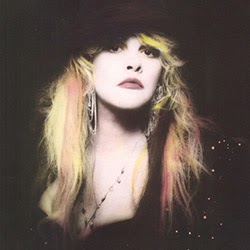
Stevie Nicks - Street Angel (1994)

The 90's were not kind to Stevie Nicks. First, Fleetwood Mac fell apart. Their 1990 album Behind the Mask was kicked-off with a successful Christine McVie single, but Nicks' work was still uneven and the album sank without a ripple. Although many critics attributed the band's fall to Lindsey Buckingham's departure, it should be kept in mind that his solo album of the same period (Out of the Cradle) fared far worse than Behind the Mask. The poor performance of both albums was due to the radically changing musical landscape of the time.

Given that context, it's not really clear why Nicks released Street Angel. Her career needed an authoritative work to reassert her relevance, and Street Angel is a mediocre album that could only appeal to her base. On the plus side, the production (by Thom Panunzio and Nicks) is clean and sassy, moving Nicks away from the overproduction of her previous two studio albums. Also, some of her lyrics are written with a clarity not seen since Bella Donna. Despite these positive changes, there's no getting around the fact that the album sounds dated and stale. Embracing the hip-hop or grunge trends of the time would not have suited Nicks at all, but resting on her laurels was not a much better alternative.

Ultimately, Street Angel stumbles due to a combination of poor songwriting (a shocking charge to level against a Nicks’ solo album) and a lack of new ideas. For example, "Blue Denim" would have been a great song in 1984 but in 1994 it just comes off as tired. "Destiny" actually recycles lyrics from "Enchanted," a song off The Wild Heart. Elsewhere "Greta", "Docklands", and "Jane" are Nicks at her most self-indulgent, and her dreadful cover of "Just Like a Woman" is painful to listen to. There are just enough solid songs to make the album passable, but many of the best ones come from outside writers. 

This brings us to another failing of Street Angel: the absence of Stevie Nicks. She sings authoritatively but few of the songs resonate with her witchy take on rock, likely because her role in the writing is relatively small compared to all of her other solo albums. This is odd given her track record as a songwriter but, when you also consider that two of the best songs on the album (the title track and "Love is Like a River") were penned solely by Nicks, her reluctance to include her own material becomes positively mysterious. No matter how strong the other material is - "Unconditional Love" and "Maybe Love Will Change Your Mind" are wonderful pop songs - there's just not enough Stevie to satisfy fans. As a result, Street Angel is easily Nicks' worst solo album.

Street Angel came and went with little notice, and is only to be purchased by Nicks' completists. Nicks rode out the rest of the decade with a hugely successful Fleetwood Mac reunion (The Dance) and a lovingly created solo boxed-set (Enchanted). These efforts cemented her status as an elder rock icon. 

Depending on how much you like Street Angel, it was either the final stop in Nicks' drawn out fall from grace or the first faltering step of her return to prominence. Whatever the case, the new millennium would find her assuming the mantle of a rock legend while at the same time producing much better work to a far more receptive public.


Monday, August 11, 2014

Stevie Nicks - Timespace (1991)


Most artists from rock bands that attempt solo careers don't end up charting enough singles to create a legitimate greatest hits package, but Stevie Nicks is one of the few who can. In fact, Timespace eschews some of her top 40 hits ("After the Glitter Fades" and "Nightbird" are missing) to include some of her best album tracks ("Beauty and the Beast" and "Has Anyone Ever Written Anything For You", the latter was a low charting single in 1986).

The truly striking thing about Timespace is not that Nicks has the hits to justify such a package but the strength of the collection. Timespace documents how Nicks truly grew through the 80s, lifting off from the ashes of the seventies rock sound that Fleetwood Mac helped define and ultimately rising to create her solo niche based on the new electronic sounds of the 1980s. And she did so largely without compromising her musical style or artistic vision.

Most greatest hits albums include a few new tracks, and Timespace has three. While they are mostly solid work, they are not required listening. It's always wonderful to hear Nicks tackle songs by other artists, but the hair-metal of Jon Bon Jovi ("Sometimes It's a Bitch") and Bret Michaels ("Love's a Hard Game to Play") is really more suited to Cher or Heart than an artist as unique as Stevie Nicks. The aforementioned songs are great listens, and "Sometimes It's a Bitch" was a moderately successful single for Nicks to kick off the 90s. On the other hand while I enjoyed the third new track, "Desert Angel", it's an example of the self-indulgent lyrics and overblown production that had begun to undermine the emotional immediacy and energy of her work.

In any case, Timespace is an excellent album for the casual listener who wants to own the best of Stevie Nicks’ solo work, which is well deserving of such a collection.


Sunday, August 10, 2014

Stevie Nicks - The Other Side of the Mirror (1989)

In the first half of the 1980's Stevie Nicks established herself as a rock and roll double threat. A powerful contributor to Fleetwood Mac's monstrous success, she also built an equally credible solo career on her own. However, after her third solo album (Rock a Little), she seemed to be in some kind of free fall due to drama in Fleetwood Mac and her own widely publicized drug problems. Whatever the issue, her output slowed and the quality of what was produced dropped radically. Her songwriting contributions to Fleetwood Mac's sleek 1987 album Tango in the Night, for example, were flat out embarrassments to both herself and her band mates.

On The Other Side of the Mirror it feels as if Nicks is struggling to regain her footing, and it may be that Rupert Hines was not the best producer for her to work with at such a time. I say this despite the fact that it could have been a magical collaboration at another time, as there are definite strengths on Mirror. Most of Stevie's songs are well-written, she produced an enthralling hit in "Rooms on Fire", and the overall sound of the album steps back from the synth-heaviness of Rock a Little. Vocally, Nicks sounds fresher and in better shape (perhaps a benefit of having kicked cocaine). 

However, there are also several recurring weaknesses that undercut the album: many of the tracks are self-indulgent and lyrically off the deep end. A generally over-produced feel ultimately creates a listless sound, which blunts Nicks' usual strengths as a writer and performer. Examples are plentiful.
"Two Kinds of Love" is a great duet with Bruce Hornsby, but it lacks a direct emotional connection that she usually delivers on such songs (e.g., "Leather and Lace"). "Whole Lotta Trouble" is a horn-blazing rocker that never manages to evoke high drama (a la "Edge of Seventeen"). "Juliet" rocks and
"Alice" menaces, but both are ultimately too unfocused to hold together for anyone other than a die-hard Stevie Nicks fan. Her lyrics on "Long Way to Go" - an otherwise propulsive track with fierce vocal commitment - are so oddly phrased that she sounds like she's imitating Jedi Master Yoda. The nadir is "Fire Burning," a mess of a song that takes three minutes to go nowhere.

Leading up to this release, Nicks may have been spending more energy exorcising her demons than writing songs. From that standpoint, Mirror would be a remarkably solid album. A certified fan will no doubt enjoy it (as I did), but it’s hard to imagine anyone not noticing there’s just less electricity in the wiring this time out. Her next release, the aptly titled Timespace, would be a "best of" effort. Its release may have been a stopgap as Nicks tried to regain career momentum.


Saturday, August 9, 2014

Stevie Nicks - Rock a Little (1985)

With Fleetwood Mac's future in question, Stevie Nicks forged on with her solo career. She was clearly the most successful Mac solo artist. For example, either of her first two efforts (Bella Donna or The Wild Heart) matched the combined sales of all five other Mac solo albums released by this time (two surprisingly strong projects from Mick Fleetwood, two grating efforts from critic's darling Lindsey Buckingham, and a solid offering from songbird Christine McVie).

Nicks' success was partly due to the fact that she made her band mates look like they were standing still. While Buckingham recycled his Tusk eccentricities and McVie continued making pure pop magic, Rock a Little found Nicks experimenting with new sounds. Notably, she completely embraced the synth-pop style of the mid 80s, as well as welcomed new producers and musicians. Although the changes suit her style very well, there's definitely a more trendy sound to Rock a Little. As a result, it hasn't aged as well as her first two albums.

Keeping that in mind, Rock a Little is an outstanding effort to blend Nicks' poetic drama with the synthesizer age. "Talk to Me" and "I Can't Wait" were big hits, although Nicks was not the primary writer on either track. In fact she only wrote three songs by herself, a major change from The Wild Heart and Bella Donna, where she wrote virtually the entire album. The smaller role for her songwriting immediately makes Rock a Little less compelling. Vocally, however, she's as impressive as ever if a bit frayed around the edges.

Beyond the hits, "Sister Honey" and "If I Were You" show Nicks bending her new soundscape to fit her needs. On the other hand, she's swallowed up in the over-production of "The Nightmare." Further, the record is hurt by some lyrics that are oblique even for Stevie Nicks, and there's a general lack of musical focus ("Imperial Hotel" seems to have wandered in from some Tom Petty album). Despite the cracks showing in Nicks’ skyrocketing solo machine, she closes the album on a powerful note. "Has Anyone Ever Written Anything For You" is one of her most beautiful ballads.

Unlike her previous albums, Rock a Little is not a classic. It's too steeped in 80s production values to endure in that way. Taken for what it is it's a great album, although the pace of her dual career was clearly starting to take a toll.

[An interesting side note: The remix of "The Nightmare" on the "I Can't Wait" maxi-single - for which Nicks is credited with additional production and remixing - is much better than the album version.]


Friday, August 8, 2014

Stevie Nicks - The Wild Heart (1983)

Coming off the massive success of Bella Donna, which easily overshadowed Mirage, Fleetwood Mac's well-crafted but tepid 1982 release, Stevie Nicks side-stepped the sophomore slump by topping herself with The Wild Heart. Although "Stand Back" was a smash that has become her most popular song, The Wild Heart is not as obviously commercial as Bella Donna. The Wild Heart is more of an artist's album, and Nicks' spreads her wings to command and fill the entire effort with admirable authority.

For a Nicks' fan, The Wild Heart is nirvana: longer songs with more passionate, imagistic lyrics than ever. The title track and the album closer are epics - each over six minutes long - that work the opposite ends of Nicks' spectrum. "Wild Heart" is a thunderous, passionate anthem with her most thrilling vocal work ever, and "Beauty and the Beast" is symphonic gothica for which the term ‘ballad’ is just inadequate. In between, Nicks indulges her mixture of rock and fairydust with alluring results. "Enchanted" and "Nightbird" are pure Nicks and would never have seen the light of day in the more structured programme of Fleetwood Mac.

The Wild Heart also finds Nicks updating her sound into the 80s with striking ease, especially when you consider how most 70s acts that tried to do this either completely sold out or made fools of themselves. She stretches herself well beyond the Fleetwood Mac sound (the torrid "Nothing Ever Changes") and even kicks out a trendy hit (the synth-pop confection "If Anyone Falls"). Tellingly, the one weak spot is the somewhat out of place Tom Petty duet ("I Will Run to You"). It's not a bad song but another Nicks-penned cut such as "Sleeping Angel" or "Blue Lamp", both of which ended up buried on soundtrack albums, would have worked much better.

If you are a hard core Stevie Nicks fan, The Wild Heart is superior to Bella Donna. For the casual listener, it would be a toss up between two classic albums. However, Nicks' vocal performances, expansive writing, and the way she sells these songs makes The Wild Heart the more personal, adventurous, and therefore better effort. Maintaining careers in Fleetwood Mac and on her own, however, was bound to keep her from burning white hot for long. Her next solo album, Rock a Little, would show the strain.


Wednesday, August 6, 2014

Stevie Nicks - Bella Donna (1981)

Stevie Nicks is releasing her new solo album 24 Karat Gold in October. She has been my absolute favorite performer, singer, and songwriter ever since I was ten years old and bought Rumours. The new album, as well as having started to learn her song "Landslide" on guitar, made me think to post reviews of her solo albums here on Zen Throw Down. So, for a little while, this blog will be transformed into a Stevie shrine! Let's start with her solo debut, Bella Donna.


Stevie Nicks' solo career was off to a strong start before the 1981 release of her first solo album Bella Donna. Nicks had major hits via a duet with Kenny Loggins in 1978 ("Whenever I Call You Friend") and John Stewart in 1979 ("Gold"). In addition, half of the hits from Fleetwood Mac's 1979 Tusk album were penned by Nicks ("Sara" and "Sisters of the Moon"). The songs on Bella Donna take these successes as their starting point and fill the rest of the album with Nicks' more typically output.

The result was a shrewdly crafted classic rock album that appealed strongly to both her existing fan base and the general listener. Top 10 duets such as "Stop Dragging My Heart Around" and "Leather and Lace" catapulted the album to the #1 spot, making Nicks the first (and ultimately the only) member of Fleetwood Mac to earn solid commercial success outside the group. So much for the question of whether she's a viable solo act.

However, Bella Donna was much more than a calculated star vehicle. "Edge of Seventeen" is Stevie in all her mystical glory and has become a rock standard outlasting the more standard fare such as "Stop Dragging My Heart Around." Other Nicks' songs, notably "Kind of Woman" and "After the Glitter Fades," are songwriting jewels proving she has the goods regardless of whom she partners with. "Outside the Rain" is a great track if you're a Nicks fan, but then a solo album for a star like Stevie Nicks should cater to her fans a bit.

Bella Donna was the perfect album to get Nicks established as a solo artist, and it does so without compromising her image or style. That Nicks could pull this off in the all-boys'-club of late seventies rock was no mean feat. As great as Bella Donna is, however, Nicks' next album, The Wild Heart, would be even better.

Saturday, July 26, 2014

"Player Dog Rest in Peace" & The Power of the Arts

cover of "Player Dog Rest in Peace"
A friend of mine posted on Facebook that, as she was going through old folders, she found a copy of the poetry chapbook I published back in 1996, titled "Player Dog Rest in Peace". I shared the cover on Facebook and several friends remember and/or still have a copy of it!

Seeing the post from someone else reminded me how happy I am that I put out the effort to publish this. I didn't make much money (I covered the printing costs and had enough extra to buy a nice dinner during a night out with friends). And it didn't "lead anywhere" (i.e., I'm not a famous poet). However I've long since learned that, if we only do things that make money or lead somewhere, that we're missing some of life's most enriching opportunities and experiences. I learned a lot from creating and publishing "Player Dog Rest in Peace".

The power of this chapbook is what it conjures up in me. I smiled the instant I saw the picture posted by my friend, because a flood of memories associated with it and the poetry it contains - which was all written during my first few years living in Chicago - came to mind:

  • Reading "Intro to Urban" at the Green Mill with a jazz trio playing "Cantaloupe Island" behind me
  • Afternoons and evenings hanging out at La Piazza coffeehouse on Broadway
  • Being a featured poet in the Poets Alive! series at Cafe Voltaire
  • My experience of love at first sight, which ended very sadly within days and led me to write "Dominoes", a poem published by four publications within a few months
  • Having over a dozen poems published in various small press zines
  • Performing my gay rap song "Icebreaker" at Pong Jam (again with a band behind me)
  • Lifting interesting phrases from opaque personals in The Reader (the title for the poem "Apocalypse Surfer" being one) 
  • Seeing rapper Guru perform live with jazz legend Donald Byrd (and Vanessa Daou opening)
  • All the crazy little theatre venues: Annoyance Theatre, Torso Theatre, and the Neofuturarium
  • Discovering Sartre and Nikki Giovanni and loads of other writers while riding the el to wherever I might have been going at any particular time
  • Seeing a tour bus go by and then realizing in shock that someone was taking a picture of me(?)
  • All the fun I had drawing the cover, designing the book, and playing with fonts
  • Sitting in the window of my third floor walk-up, with my feet dangling into space and writing as the sun set, while listening to the latest acid jazz CD I'd picked up at Evil Clown Records 
  • Going out for Ethiopian food with friends and finding a man there playing a giant kora harp
  • The joy of completing large poems like "The City is Made of Music" and "I am Pete; I Be Writing"

This period of my life seemed to be one moment like this after another, and it lasted something like three years. It was one of the best times of my life, partly because I was writing, publishing, and performing so much but also because what I was writing was such a perfect prism of my experiences in the city as well as all the things going on in my life. I was writing very personal poetry and creating a kind of private language, yet it was all very accessible work that captured a place and time in words. At the tail end of it, I met Jim and - before I knew it - one chapter of life came to an end and another began.

As for the title of the chapbook? When I was a little kid and we drove into the city, I always remember seeing this overpass where someone had spray painted the phrase "player dog rest in peace". For me, this was the gateway to Chicago. While I always wondered who wrote the graffiti and why, I'm glad I never found out and it remains a question mark. Anyway, after I moved into the city (as I'd wanted to do for most of my life), that overpass graffiti immediately suggested itself as the ideal title for this chapbook I was making to compile all the poetry that encapsulated my experiences in Chicago.

Almost two decades have gone by. The overpass graffiti has been erased, La Piazza is closed, Evil Clown and Cafe Voltaire are both gone, and the neighborhood I lived in is a lot more like Lincoln Park than the diverse, quirky, rough around the edges community I remember. And I'm different too. I'm definitely not that brassy little gamin with the oversized clothes and backwards baseball cap (think The Little Rascals with a grunge/hip-hop make-over) who moved to the city to - as I wrote in the poem "Intro to Urban" - "walk rainbow streets/and take a hit on the blunt of life".

I'm writing about this, because it's an example of one of the most powerful things about art - our own or anyone else's. Art encodes itself into our lives and captures parts of our lives like gas giant planets with a hundred tiny moons in orbit. When we experience that painting or song or poem again, we get to go back and relive those memories and feelings again.

Saturday, July 19, 2014

Mumonkan, Koan 2: Hyakujo's Fox

image: The Gateless Gate blog
I had forgotten to post this koan! Maybe I didn't because, back over four years ago when I first integrated the Mumonkan into my Zen practice, I wasn't sure if I was going to stick with it. Or it perhaps it's because I didn't think I had solved it. (Or maybe I just dreaded typing it!). Whatever. I went back into my journal so the Mumonkan thread would be complete.

When Hyakujo Osho delivered a certain series of sermons, an old man always followed the monks to the main hall and listened to him. When the monks left the hall, the old man would also leave. One day, however, he remained behind, and Hyakujo asked him, "Who are you, standing here before me?" The old man replied, "I am not a human being. In the old days of Kashyapa Buddha, I was a head monk, living here on this mountain. One day a student asked me, "Does a man of enlightenment fall under the yoke of causation of not?" I answered, "No, he does not." Since then I have been doomed to undergo five hundred rebirths as a fox. I beg you now to give the turning word to release me from my life as a fox. Tell me, does a man of enlightenment fall under the yoke of causation or not?" Hyakujo answered, "He does not ignore causation." No sooner had the old man heard these words than he was enlightened. Making his bows, he said, "I am emancipated from my life as a fox. I shall remain on this mountain. I have a favor to ask of you: would you please bury my body as that of a dead monk."

Hyakujo had the director of the monks strike with the gavel and inform everyone that after the midday meal there would be a funeral service for a dead monk. The monks wondered at this, saying, "Everyone is in good health; nobody is in the sick ward. What does this mean?" After the meal Hyakujo led the monks to the foot of a rock on the far side of the mountain and with his staff poked out the dead body of a fox and performed the ceremony of cremation. That evening he ascended the rostrum and told the monks the whole story. Obaku thereupon asked him, "The old man gave the wrong answer and was doomed to be a fox for five hundred rebirths, Now, suppose he had given the right answer, what would have happened then?" Hyakujo said, "You come here to me, and I will tell you." Obaku went up to Hyakujo and boxed his ears. Hyakujo clapped his hands with a laugh and exclaimed, "I was thinking that the barbarian had a red beard, but now I see before me the red-bearded barbarian himself."

Yeah, it's a long koan and it's rather unique because of its length. It's also unique because it contains this fantastical, supernatural story involving a form of 'divine punishment', which I find distasteful. After reading my notes about it in my journal, I think it's pretty clear I didn't really 'solve' it.  Maybe the length threw me?

My initial reaction had been to ignore the wacky story and focus on the interaction with Obaku. However, as I think about it now, that was probably a mistake (more on that in a bit). What I initially got out of this koan is how dangerous it is to give answers (this is why Obaku boxed Hyakujo's ears and why Hyakujo was so pleased that he did so). It's really suggesting that the old man's offense was not giving the wrong answer but because he gave an answer at all. To extend this, perhaps we are all foxes when we try to tell people 'answers' or hand them 'truths'.

Image: Marvin Schulz
This lesson also touches on perception through it's 'Russian doll' structure. The koan's structure is a story within a story within a story. The writer of the koan is telling us about Hyakujo, who has apparently related to him this story about an old man he met, and the old man is telling Hyakujo a yarn about being made a fox. So we are, at minimum, third or fourth hand from reality. This is another possible reason for Obaku to box Hyakujo's ears, for they were discussing interpretations of recollections of experiences, rather than dealing in direct perceptions.

Now, back to my mistake in dismissing the wacky story. In the story, Hyakujo's answer about whether an enlightened man is subject to causation is: "He does not ignore causation." This made me think of, how when I sit in zazen, thoughts always come to me as I clear my mind. What I've learned is that if I try to ignore those thoughts or silence them, they persist. It's better to acknowledge them, even as I do not pursue them. I imagine them as small helium balloon drifting towards me. I acknowledge each one and think "later" to send it away. Doing this make it much easier to clear my mind. This might be similar to what Hyakujo meant in his answer. Whether we are able to keep something from impacting us or not isn't the point; we cannot ignore it if we want to stay in the right mind state. Ignoring or suppressing something is an activity. An alert mind can be clear, but and active one? Probably not so much.

These are all nice take aways, but I'm still not sure I've exhausted this koan. Perhaps that was the reason I didn't post it way back when I worked with it, and it wasn't until much later (Koan 12) that I really grasped that koan study cannot be viewed as a relay race. Not getting a particular koan isn't a bad thing, and it's not something to be stymied by.

Wednesday, July 9, 2014

The Power of Everyday Zen

Jenny Trout:
"I Wore a Bikini and Nothing Happened"
Everyday Zen is a term I use (and, I think, coined) to refer to the practice of bringing the mind state reached during zazen into everyday life. The idea is that, once discipline of the mind is learned through zazen, that it can be applied at any time...or even all the time. [Here are other posts about Everyday Zen on Zen Throw Down: Ordinary Mind is the Way & Everyday Zen and then later More on Everyday Zen.]

I thought of the power of Everyday Zen when a friend sent me a recent article by Jenny Trout called "I Wore a Bikini and Nothing Happened". It's a short, humorous piece about a serious issue: body image. In the article, the author (pictured) describes how she refused to allow others to dictate whether she should wear a bikini, how she should feel about wearing a bikini, and - most importantly - how she should feel about herself.

Trout never references Zen Buddhism or Everyday Zen in her piece, not even indirectly. However, I found the spirit of her thinking to be very much like the disciplined mindset of Zen Buddhism or Everyday Zen. In particular, the way she filtered out and refused to be influenced by the negativity of those around her. This attitude or mind state is in direct contrast with what we refer to in Zen Buddhism as a deluded mind state. A deluded mind state can be many (many, many, many) things, but it sometimes entails creating our own suffering through second guessing ourselves, creating self-doubt, or dwelling on negative thoughts.

Zazen, by disciplining the mind, teaches us how to recognize when we are engaged in the right mind state. For me, I've learned what the right mind state feels like. That way, through Everyday Zen, I can be like an adult providing a gentle course correction to a child who's learning to ride a bike. More precisely, I become both the child learning to ride and the adult making the correction. When I recognize I'm slipping from the right mind state, I can subtly correct myself. Instead of suffering the pain of a fall, I facilitate riding (even if I'm riding a bit ineptly).

I had a situation like this (and like Trout's) occur to me recently. A little while ago, I posted how I'd started taking guitar lessons. While I was considering whether or not to do it, I got discouraged when it occurred to me that most people start learning a musical instrument when they are a child. And then I thought that it might seem strange to people to see an adult doing this. What I was doing was inventing a worry or problem in my head that may or may not really exist and then allowing it to influence me as if it were real.

This is one of the many poisons of a deluded mindset: we convince ourselves everyone is focused on us to a degree that is simply unrealistic. We over think the situation and, in doing so, place ourselves on a rack of self-consciousness and self-doubt that makes us miserable. And/or we allow the thoughts and judgments of others - real of imagined - to direct our behavior. Delusion - simply put - is a torture chamber we create in our minds where we are both the victim and the sadist.

Luckily, I recognized that this was not right-minded. When that happened, I dismissed all those thought and concerns. As it turns out, I have not received any strange reactions from anyone. Of course, I'm not sure what other people think about me taking lessons but, importantly, I am not spending any time pondering it or trying to figure it out. It's ultimately not important and, truthfully, it's most probable that no one is giving me and my guitar lessons any thought at all. If I'd turned away from taking them, I would have deprived myself of a new experience for no reason.

Avoid the maze of delusion (although, in Zen philosophy,
'contentment' might work better here than 'happiness')
The way I caught myself, and the way Trout pushed back on other people's judgement of her wearing a bikini are small examples of the power of Everyday Zen. The important thing to realize is that, by disciplining the mind, we gain power over life. Happiness is much easier to achieve when we're not our own worst enemy.

This discipline also thrusts ownership for one's own life back on oneself (where it belongs). Ultimately, we can't blame our own insecurities on other people when we're the ones with the power to decide whether they or their opinions affect us. Everyone faces self-doubt or harsh judgement in their lives; how we deal with it is what determines whether we will be at peace or not. We can either let self-doubt and outside forces rule us or we can be free of them. If we allow it to rule us, we cannot forget that we are the ones who put the chains on and wear them.

This is not to say that Everyday Zen solves all problems or guarantees life will be blissful and easy. Suffering is a part of life, and I have found there are always people who want to control me and who will punish me or try to hurt me if I do not let them. However, from experience, I have also learned that no matter how unhappy or painful their actions are in the short term, by maintaining the right mind state I will be content in the long run.

A saying by an ancient Zen Master named Dazhu sums it up best: "You are luckily alright by yourself, yet you struggle artificially. Why do you want to put on fetters and go to prison?...When will you ever stop?" (trans. Thomas Cleary).

Ordinary mind is the Way!

Wednesday, July 2, 2014

Zen Case Study: The Lightning Whelk

Everyday Mind is the Way
calligraphy by Nonin Chowaney
Something that can happen while in the right mind state is that we're present enough in the moment to see life lessons that are right before us. I call these Zen case studies. A Zen case study is never sought out nor created. It's not figured out or thought through. It happens like a bolt of lighting, yet it contains so much meaning that it resonates far beyond the specific event that triggers it.  They're also almost something that easily is missed if we're not paying attention.

As an example, many years ago we were staying at a beach house on Sanibel Island in Florida. The place is famous for shell collecting, but we were staying there off season to avoid the crowds. This meant the shelling was not at its peak, although it was still fun to walk the shore and look. During our stay, I immediately got in the habit of taking an early morning walk along the beach. No one was out, and even the sea birds seemed quiet. Just the wind and the waves.

I was walking very slowly, mainly because there was no reason to walk quickly. I wasn't going anywhere in particular, and I'd stoop from time to time to look at a shell or stare out at the sea. I also wasn't thinking much of anything. All the inner noise was silent, and I was only paying attention to the things that were happening right then and there before me. If someone had asked me what I was thinking, my answer honestly would have been: "Nothing".

At the same time, not thinking doesn't mean I was zoned out or a mindless zombie. I was totally aware of every gust of wind in my hair, the smells around me, the rising sun on my skin, the crash of the waves, the sharpness of sand and grit under my bare feet, and the coolness of water washing over my feet. So while I wasn't thinking, I was very alert of myself and of my surroundings. In short, I was in samadhi.

Eventually I decided to turn back. But even having a destination didn't alter my mind set. The decision to go back came and and went, and the only impact was that I turned around and walked in the opposite direction. My pace did not quicken, and I wasn't thinking about what I would eat or do when I got back. Nothing like that. I was still completely in the moment.

It was soon after I turned back that I noticed a disturbance in the surf that had not been there before. As I walked I noticed that each wave sliding up the beach recreated the disturbance, so it really was something unusual. When I reached it I found what looked like a piece of coral sticking out of the water. As surf fled back into the sea, it left a ten-inch long lightning whelk shell glistening on the sand before me!

The lightning whelk in question
Probably grinning ear to ear, I picked it up and washed it off in the surf. It wasn't the most pristine lighting whelk, but it was so unexpected a find that I was thrilled! It had clearly just washed up to shore within the few minutes since I'd passed the spot before. I held it and looked out over the sea, feeling like it had just given me a gift.  That's when the lightning struck.

I realized how easily I could have missed this gift from the ocean. I would not have seen it had I taken a more direct route back to the beach house, been staring at my phone, or walking quickly and looking somewhere else. It was a perfect case study for why we discipline our minds. Doing so let's us see the things that are right in front of us, things we know deep down but second guess or ignore while in the rush of daily life. And so much of what we need to know about ourselves and what to do in life is in those moments. If we just are open to it and not running away, wisdom washes up to our feet like this lighting whelk did for me.

Of course, once I was struck by the lighting of the Zen case study, my state of samadhi totally vanished! I instantly transformed into my ten year old alter ego, and I couldn't wait to show Jim what I'd found! Of course, I didn't say anything about the Zen case study. I feel it's best to keep Zen case studies to myself for a long time.  It helps them resonate more fully and cement themselves into my mind. Once we analyze them or talk about them, we tend to dilute them.

Wednesday, June 25, 2014

Magazine Mania! (Part Three)

And...even more magazines. See? It is a mania!

The Paris Review

It’s usually not a good idea to subscribe to a fiction magazine. If there is a variety of authors and styles represented, then it tends to be a hit or miss affair. Some stories/authors resonate and others fall flat. If there is a narrow focus then, even if you like that focus, the magazine will start to feel stale after a few issues.

However, the issue I read of The Paris Review largely avoided these pitfalls. It’s a 200+ page quarterly containing poetry, a few interviews, a half dozen short stories, and a serialized novel. That’s a lot of material! Surprisingly, I liked all of the prose even though it seems quite varied in subject matter. I didn’t ‘get’ some of it right away, but most of the stories presented meanings if I marinated on them a bit. I’ve even considered re-reading some of them to see what I may have missed the first time around. The serialized novel was thoughtfully written. While I’m not sure what the thrust of the story is, it’s only the second chapter. I’m happy to have found a magazine like this so I can maintain some connection with contemporary writers and writing. That’s usually missing amid my classicist reading preferences.

While the interviews left me cold, it was likely because the subjects didn't resonate with me more. What I’m unlikely to warm to is the poetry. I found virtually all of it typically contemporary: self-referential to the point of opacity, self-consciously arty, devoid of the love of language, and full of grindingly unevocative imagery. I’m hoping I just hit a bad issue. Otherwise, I can only pray the poetry content was higher than normal because the issue fell over National Poetry Month.

Luckily, the bulk of The Paris Review is fantastic prose that is more than enough justification for the subscription.

Astronomy

Astronomy has been around for a long time, and I have a long history with it. I read my first issues back when I was in grade school! I’ve come back to the magazine many times since. While it’s definitely a lighter magazine than Scientific American, what makes Astronomy such a good read is the tight focus. The magazine does a great job bringing the most interesting developments in planetary science and even a bit of astrophysics to the general reader. Best of all, there is excellent coverage of the most interesting developments from current space exploration missions and satellites.  Complete with the ‘pretty pictures’ we all love to see, Astronomy has an instinct for what someone with a general interest in the title subject wants to read.

If you are a telescope or space photography enthusiast, it’s hard to imagine what could be better than this publication. It contains plenty of content about how to see what and when to see it. I skip over all this material since I do not own a telescope, and there’s probably too much light pollution where I live for it to make sense buying one. While that’s a lot of pages I’m not reading each issue, I don’t mind at all. It’s even kind of a plus, given the volume of magazine reading I’m undertaking of late.

Apollo

This is an absolutely beautiful magazine about art and art collecting. It screams high end and delivers a luxurious tactile and visual appeal in every issue. The latter is especially important in a magazine about the visual arts. Apollo tackles all periods of art from ancient art all the way to contemporary painting. The writing is rather scholarly but avoids being stuffy for the most part. Of course – small quibble – there seems to be an odd bashfulness about acknowledging the sexuality of homosexual artists. The words “companion” and “friend” have appeared in some articles, as if the writers were at a tea party in the 1950s.

The magazine has an extra dimension in that almost every issue contains an article about a major art collector. While I can’t imagine I’ll ever become so expert in collecting, I find it super interesting to read their thoughts on their collections, why they collect, and how they got started. Kind of inspiring really. There are also tremendous book reviews.

I’ve been introduced to many artists in the pages of Apollo and, thanks to the scholarly approach to the writing, the profile's of the artists include their milieu. This has introduced me to some relatively obscure, yet highly rewarding, authors. I’ve picked up several novels based on references in an Apollo article, sometimes being exposed me to entirely new genres. This enriches me as well as heightening my appreciation for the art I’m viewing. Tremendous publication!

Monday, June 23, 2014

Seeing the Buddha in Other People

Something I picked up at the sangha I sat with for a while was the idea of seeing the buddha in other people. During each session our leader would have us bow at certain times, either to each other or towards a statue of Buddha. She was always very clear that we were “not bowing to Buddha. We’re bowing to the Buddha in each of us.” In my head, I just saw the bowing as akin to the show of respect that it represents in a dojo. However, later on, it took on a significance closer to what was intended.

I’m not sure if I’m alone in this but, as I got older, I found I had a harder time naturally making eye contact with new people I met. I have to consciously think about making that contact and holding it. I’m not really sure why this happened. It could be a result of moving into the city, where such eye contact is not always the best idea. Or perhaps it's simply part of the cynicism that creeps into our mindset as we get knocked around by our (sometimes negative) experiences with people in life.

Whatever the case, I wondered if  ‘seeing the buddha’ in people might help change that. So I started thinking about it. Everywhere. With people I passed on the street. With people who cut me off in traffic. With people at work. I found that I started to naturally seek out people's eyes more. I was looking at them rather than simply dealing with them. It was an odd mental shift, and the fact I had to make it suggests there’s something I can learn from this.

Of course, it’s hard to focus on this idea all the time. It’s running counter to a mentality I’ve clearly formed over a lot of years. However, one positive side effect is that I find myself thinking more about what lies behind the people I meet. I also feel more at ease around people, and perhaps even a bit more positive towards them. I’m not sure where this will lead (if anywhere), however it’s interesting in that it seems to have tweaked my relationship to the world around me.

Sunday, June 22, 2014

Magazine Mania! (Part Two)

More magazines in my recently established queue...

Scientific American

Okay, I know this is not an especially original selection, but over time I have truly found Scientific American to be a great balance between hard science magazines and those that are popular because they're a bit too lightweight (e.g., Discover). The articles in Scientific American seem to emphasize subjects that non-scientists will find interesting, and yet do not pander to us. At least not too much...dinosaurs do seem to appear on the cover an awful lot ; )

Another great thing about Scientific American is that articles end with a thumbnail box listing further reading, often including books or articles from harder science pubs. So if a subject really fires my imagination, I have some directions for how to dive into the deeper water. On the other side of this, about twenty years ago I read so voraciously about theoretical physics and cosmology that I was considering taking a calculus course, because the books I wanted to read started using equations to explain things. My ever migrant imagination took me in another direction before I got too serious that, but with Scientific American I feel like I can keep up somewhat with a discourse I still find thrilling.

American Craft

For some time, I've toyed with the idea of opening a gallery someday. While this may be one of my many ideas that ultimately goes nowhere, it spurred me into visiting some galleries, talking to the owners, and thinking about what kind of creative works I admire enough to represent in my imaginary gallery. What I discovered is that I get really excited about where art and craft intersect. There are brilliant artists out there whose process is just as fascinating as the work they ultimately produce. For example, I came across one artist (or artisan?) who weaves baskets and other forms. She apparently grows all her own materials. She grows plants, harvests them, and then creates the reeds, string, and whatever else she needs to create her works. For me, this made her objects a thousand times more meaningful.

Lo and behold! There is an arts magazine that focuses on just this kind of work! American Craft - in just a few pages - made me realize I held an assumption that 'crafts' are a lightweight cousin of painting and sculpture. I really can't believe I actually held this opinion, but I have been thoroughly cured of it. In the issue I read, the volume of artists covered and the array of media and materials touched on made me feel like a kid in a candy store. So much amazing work is out there, and I'll be surfing the web to explore many of the artists covered and even some of the works advertised. Definitely looking to have my perceptions stretched by this magazine!

The Humanist

One of the benefits of being politically independent is that you are not a Democrat or a Republican, a conservative or a liberal. You are free of labels and, thus, free to explore and accept any and all ideas you find worthy. When someone balks at a belief I hold that doesn't fit predictably with wherever they have attempted to pigeonhole me, I get to smile blithely and say: "I'm an independent, my dear."

As I was exploring potential magazines to subscribe to, I thought: "What I would love to have is a magazine that - without stinking of pot and hippies - introduces the latest super-liberal, non-religious thinking." There are tons of ideas that come from this end of the spectrum. Today, they get dismissed as left wing Utopian idealism...only to end up informing our reality years later. It's like when you watch a couture fashion show or visit a cutting edge art gallery. You wouldn't wear or buy much of anything you see, but this is the fertile ground of ideas from which everything cool that you will end up wearing or buying comes from.

The Humanist may be that magazine for me. While I get my dander up when I sense shallow polemic (see recent post refuting one article that annoyed me), there are fantastic ideas in this magazine. Since I naturally lean towards fiscal conservatism and yet am all too aware of the social and economic equity issues we face in our nation, exposure to these ideas on a regular basis will help broaden my perspective. Whatever we might think of hippies and left wing Utopian idealism, the US needs this element in our discourse to stay fresh and vibrant as a nation.

More pubs to be covered in subsequent posts.

By the way, it's amazing that I am actually reading all this material (so far)! Ensuring that a good number of the pubs I select are quarterly or bi-monthly helps keep the reading level manageable.

Saturday, June 21, 2014

Magazine Mania! (Part One)

With a lot more time to read lately - and a determination to take a break from Zola - I decided to dive into the world of publications. I have nothing against reading on my tablet, but I do prefer print magazines because it allows me to escape screens. That's got to be good for my eyes.

Of course, I had to turn the selection of pubs I would subscribe to into an adventure! I went to a few bricks-and-mortar bookstores and scoured their massive rows of magazines. Exploring all these small, obscure pubs was fun! There are so many crazy magazines out there that you can't believe command a readership that keeps them afloat. Wanting a variety of subject matter, I picked the pubs that seemed to be the best for me. I figured I'd read them and, if they clicked, subscribe.

Some of these are magazines are quite popular, others I was already familiar with, and some come to me from supporting charitable organizations. Here are a few of the pubs I chose and am currently enjoying. I'll need a few posts to get through them all as I really have gone on a 'mania' with them.

The Economist

For a long time, have been lax in keeping up on world events. I suppose I got turned off by how phony news outlets have become: the generic human interest stories, morbid sensationalism of randomly selected crimes, and loathsome political polarization. For example, I know Fox News will bash anything Obama does because their politics drive their news. And there are left wing sources with the same ax to grind. So why bother? I also turn-off to overly manicured newscasters. I just don't find someone who looks like they spend more time in make-up than they do reading news credible.

Of course, this is all just a (lame) excuse, and I wanted to be informed again. Over the past several years, whenever I was at an airport preparing for business travel, I'd pick up a copy of The Economist knowing it was quite well-respected (and has been around for about 150 years!). I like the standardized text, lack of personalities, and the occasional dry remark that never gets too clever for its own good. While they have definite editorial positions, I sense a good mix of conservatism and liberalism in its pages. So I finally signed up!

The New Criterion

During the past few years I'd benefited from reading biographies of several authors I'd tackled (such as Melville, Zola). I also found myself introduced to writers as I learned about the milieu of certain artists. I wanted a magazine that would give me this kind of input on a regular basis. The New Criterion may fit the bill for me. Aside from great articles on the humanities, I like that there seems to be a healthy dose of skepticism employed in assessing contemporary work. While I love contemporary art and writers and enjoy having my sensibilities stretched, I find that many arts magazines seem to convey a bland acceptance of everything. I believe part of being an art or literature lover is actively evaluating what I am exposed to. I push to be open - very open - because some of the best art experiences are those that shatter our boundaries or drag us outside our comfort zones. However, this must be balanced with a level of discernment or the entire concept of art is destroyed.

The only potential downside to The New Criterion is its sliver of political essays. The low level of thought in these essays is all the more noticeable given the intelligence of the other content. For example, the April 2014 issue has an article about which races are best suited to succeed in America based on their inherent qualities(!). The article names the Jews and the Chinese as the most effective races. Oh and, by the way, one of the authors of the essay is Jewish and the other is Chinese. Seems the magazine loses it's self-touted critical edge when it comes to politics and public policy. But I can skip a couple articles when the bulk of the material is so thought-provoking.

Lapham's Quarterly

When I came across Lapham's Quarterly, I could scarcely believe what I was holding in my hands! This quarterly magazine is over 200 pages in length. Each issue selects a theme around which the magazine amasses two to three page excerpts and essays from writers, thinkers, artists, scientists, world leaders, politicians, etc. The writers are from around the world and throughout time and, at the end of each essay, there is a thumbnail biography so you get the context and setting behind the text. The pages are also richly illustrated with art, photography, charts, and visual miscellany related to the subject.

In the issue I picked up, the theme was revolutions. Among the over 80 writers/thinkers included, the most recognizable names were Martin Luther, Fyodor Dostoevsky, Karl Marx, Shakespeare, Aristotle, Lord Byron, Margaret Sanger, Giacomo Balla, Albert Camus, Che Guevara, Emerson, Copernicus, Thomas Jefferson, Adolf Hitler, Isaac Newton, Aeschylus, and Leon Trotsky. Among the lesser known 'contributors' (at least lesser known to me) were plenty of historic and contemporary figures from other cultures that I'd likely never be exposed to on my own.

While each issue is long and text from certain writers can be a bit challenging, the brevity of each selection led me to move very quickly through the issue. Lapham's Quarterly is the literary equivalent of dining at a tapas restaurant. A little of this, a little of that. A variety of dishes that don't all go together but are all expertly prepared and create a very satisfying experience.

More to come in another post...